Koper
Koper
Koper is Slovenia's principal coastal town, with a remarkably well-preserved Venetian historic center centered on Tito Square. Medieval architecture, an active port, and easy access to Piran and Portorož.
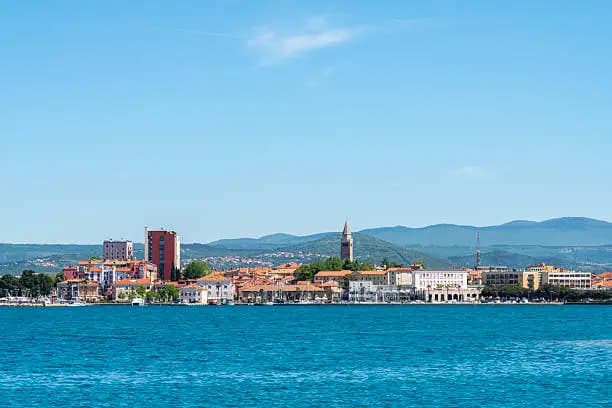
Koper is Slovenia's principal coastal town, perched on the Adriatic just kilometers from the Italian border. A former Venetian city, it retains a medieval historic center of remarkable integrity centered on Tito Square. As both an active port and university town, Koper offers an authentic atmosphere, removed from the mass tourism that overwhelms the neighboring beach resorts.
Practical Information at a Glance
- Access: train and bus stations in the city center, with direct connections from Ljubljana (~2 hours) and Trieste (~45 minutes by bus).
- Suggested duration: a full day for the historic center; two days to combine town and surrounding countryside.
- Language: Slovenian; Italian is widely understood.
- Currency: euro.
- Parking: paid parking on the outskirts of the pedestrian center.
What to See
The heart of Koper is Tito Square (Titov trg), surrounded by Gothic and Renaissance palaces. The Cathedral of the Assumption and its detached bell tower dominate the square. The Praetorian Palace, with its ornate Venetian Gothic façade featuring relief sculptures, now houses municipal offices. The lanes of the old quarter reveal loggias, stone wells, and colored façades typical of Adriatic architecture.
History and Context
Koper — Capodistria in Italian — fell under Venetian rule for centuries (1279-1797). This period shaped its architecture, culture, and language: an Italian-speaking minority remains present today. After World War II, the town became part of Yugoslavia, then independent Slovenia in 1991. Its port, now one of the most active in the northern Adriatic, remains the country's economic lifeline.
Highlights of Your Visit
The Cathedral of the Assumption and Its Bell Tower
Built in the 14th-15th centuries, the cathedral blends Gothic and Renaissance styles. The bell tower offers panoramic views over tile roofs, the port, and on clear days, the Istrian coast. The interior preserves works by Vittore Carpaccio.
The Praetorian Palace
A symbol of Venetian municipal power, this 15th-century palace features a façade adorned with busts of podestats and coats of arms. Its Gothic loggia is among the finest on the Slovenian coast.
The Medieval Quarter
The lanes between Tito Square and the port reward leisurely exploration on foot. Look out for the Muda Gate, the old city gate, and the sculpted stone wells scattered throughout interior courtyards.
The Port and Waterfront
The industrial port sits alongside a pleasant promenade. The contrast between container terminal cranes and Venetian façades perfectly captures Koper's identity: a living city, not a museum.
Photography Tips
Morning light falls beautifully on Tito Square before the café terraces come to life. Climb the bell tower in late afternoon to capture golden rooftops and sea. The Muda Gate photographs well from the pedestrian street leading to it, shot from below.
Location and Access
Koper sits in the Slovenian Littoral region (Primorska), approximately 120 km from Ljubljana and 25 km from Trieste. The historic center is entirely pedestrian. The train station is just minutes on foot from the old town. Regional buses connect to Piran (~30 min) and Portorož (~25 min) multiple times daily.
Nearby Attractions
- Piran — Venetian town perched on a promontory, considered Slovenia's most beautiful coastal city.
- Portorož — lively beach resort with beaches and thermal spas, just steps from Piran.
- Izola — quieter fishing village between Koper and Piran, with a picturesque harbor.
- Lipica — stud farm founded in 1580, birthplace of Lipizzan horses, some thirty kilometers inland in the karst countryside.
- Postojna Caves — spectacular underground network accessible in less than an hour from Koper.
Frequently asked questions
Spring (April-June) and autumn (September-October) offer pleasant weather and fewer crowds. Summer is warm and lively, but the center remains accessible. Winter is mild for the region, with minimal tourists.
Yes. Starting early from Koper, you can spend the morning exploring the historic center, then take a bus to Piran in the afternoon. Allow half a day per town for a proper visit.
Not essential for the coast: buses frequently connect Koper, Izola, Piran, and Portorož. A car becomes useful for reaching Lipica or the Postojna Caves.
Access to the cathedral bell tower is paid. Check current rates on-site or with the local tourism office.
As in all Catholic places of worship, shoulders and knees should be covered. Bring a light scarf or jacket.
Yes. The pedestrian center is safe and easy to navigate. Nearby beaches near Portorož and the Postojna Caves complement a family getaway on the Slovenian coast.
Want to discover this destination?
Our local advisors design your tailor-made trip.