Karst (Slovenian Karst Region)
Karst (Slovenian Karst Region)
A limestone plateau in western Slovénie, the Karst gave its name to a geological phenomenon recognized worldwide. UNESCO-listed caves, Lipizzan horses, grey stone villages, and teran wine: a distinct territory where nature and culture intertwine.
The Slovenian Karst is a limestone plateau situated between Trieste and the Vipava Valley, in western Slovénie. This territory lent its name to a geological phenomenon known worldwide: "karst," characterized by caves, sinkholes, and underground rivers. Vineyards, grey stone villages, violent bora winds, and Lipizzan horses compose a landscape apart, radically different from the rest of the country.
Practical essentials at a glance
- Access: from Ljubljana by car via the A1 motorway heading toward Koper (approximately 1 hour 30 minutes); from Trieste, the border is just a few kilometres away.
- Recommended duration: a full day to combine caves, village, and wine tasting; a weekend to explore in depth.
- Bora wind: frequent and violent gusts in winter and spring — bring extra layers.
- Car recommended: villages and sites are scattered; public transport is limited.
What to see
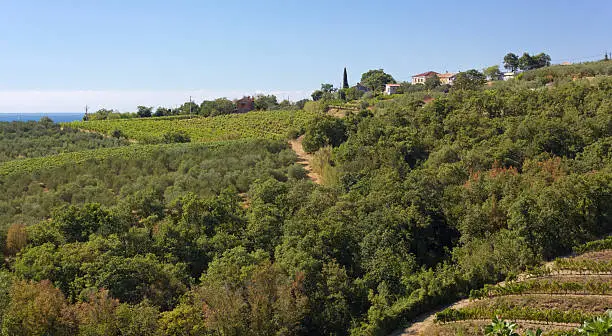
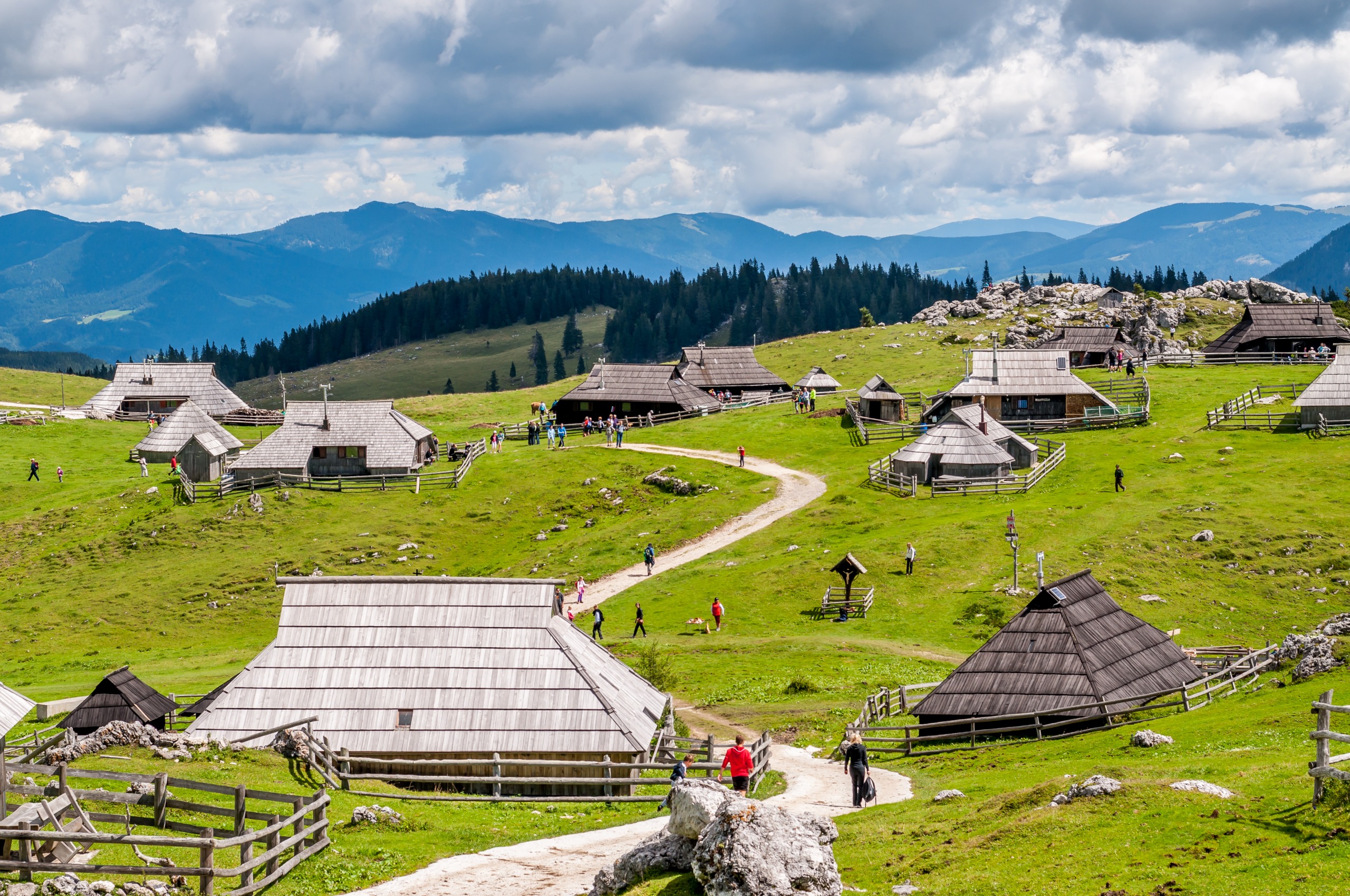
The plateau offers a mineral landscape dotted with sinkholes (circular depressions typical of karst), dry meadows, and downy oak forests. Traditional villages — Štanjel, Lipica, Dutovlje — are built in local grey limestone. The teran vine, a red grape varietal native to the Karst, grows on terra rossa (reddish clay soil) unique in Europe.
History and context
The term "karst" derives from the Slovenian word kras, designating this plateau. Nineteenth-century geologists used this region as a global reference for describing limestone landscapes. The Karst long served as a disputed frontier zone between the Austro-Hungarian Empire, Italy, and Yugoslavia, explaining the rich cultural blend of its villages.
Highlights of your visit
Škocjan Caves
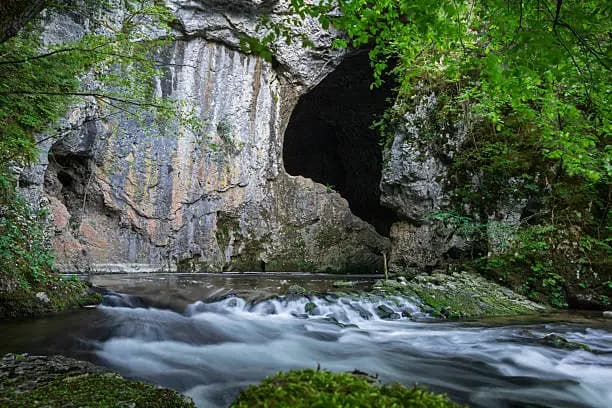
Listed as a UNESCO World Heritage Site, Škocjan Caves shelter one of Europe's largest underground canyons. The Reka River disappears beneath the earth and carves out gigantic chambers. Guided tours are mandatory and last approximately 1 hour 30 minutes. Learn more about Škocjan Caves.
Lipica Stud Farm
Founded in 1580 by the Habsburgs, Lipica Stud Farm is the birthplace of the white Lipizzan horses. Dressage performances and stable tours are offered on-site. Learn more about Lipica.
Fortified village of Štanjel
Perched on a hilltop, Štanjel is one of the Karst's best-preserved villages. Its cobbled streets, medieval castle, and Ferrari garden (designed by architect Maks Fabiani) deserve a stop. Learn more about Štanjel.
Teran wine and local gastronomy
Teran is a tannic and acidic red wine produced exclusively on the Karst's terra rossa. It pairs beautifully with Karst pršut, cured ham dried by the bora wind. Numerous family cellars (osmice) open their doors periodically for direct tastings.
Photography tips
Golden-hour light in early morning and late evening reveals the texture of the grey limestone in villages. Sinkholes photograph well from elevated vantage points along hiking trails. Inside Škocjan Caves, photography is permitted but without flash; a tripod is useful in dimly lit areas.
Location and access
The Slovenian Karst extends between the Adriatic coast and the Vipava Valley, in the western part of the country. The town of Sežana is the region's main administrative hub. From Ljubljana, allow approximately 1 hour 30 minutes by car. The region is also accessible from Piran on the coast (approximately 40 minutes). Public transport serves Sežana by train from Ljubljana, but a car remains essential to link sites together.
Nearby attractions
- Postojna Caves — Slovénie's largest cave system, about 30 km northeast, home to the emblematic olm (proteus).
- Predjama Castle — medieval fortress built into a cliff face, near Postojna.
- Piran — Venetian coastal town on the Adriatic, less than an hour to the southwest.
- Vipava Valley — vineyards and Baroque villages at the Karst's northern border.
Frequently asked questions
Spring (April–June) and autumn (September–October) offer pleasant temperatures and colourful landscapes. Summer is hot and dry. In winter, the bora wind can make visits uncomfortable, though villages are nearly empty.
Online reservations are strongly recommended during peak season, as guided tours depart at set times with limited participants. Check the caves' official website for available time slots.
Yes, the distance between the Karst and Piran is short. A well-organised day allows you to visit Škocjan Caves in the morning and reach the coast for the afternoon, provided you have a car.
Osmice — family cellars open seasonally — are your best option. They are marked by an ivy branch at the entrance. The villages of Dutovlje and Tomaj are renowned for their local producers.
Partially. Sežana is served by train from Ljubljana. But Škocjan Caves, Lipica, and Štanjel are difficult to connect between each other without a car. A rental car remains the most practical solution.
The bora is a cold and violent wind that descends from the Dinaric Alps toward the Adriatic. It can blow at more than 100 km/h in winter. Pack a windbreaker even during shoulder seasons.
Want to discover this destination?
Our local advisors design your tailor-made trip.