Kobarid
Kobarid
Between the emerald waters of the Soča and the peaks of the Julian Alps, Kobarid blends First World War heritage, white-water thrills and world-class gastronomy.
Kobarid is one of Slovenia's most celebrated destinations, masterfully combining historical discovery with nature-immersed escape. The town enjoys a privileged position within the Soča Valley, a landscape of surprising richness—waterfalls, alpine summits, dense forests and dramatic terrain. Exploring Kobarid opens the door to hiking, rafting, paragliding and compelling outdoor pursuits. Beyond adventure, the town's layered history enriches any visit; traces of the First World War are woven throughout.
Kobarid: A Town Marked by the Great War
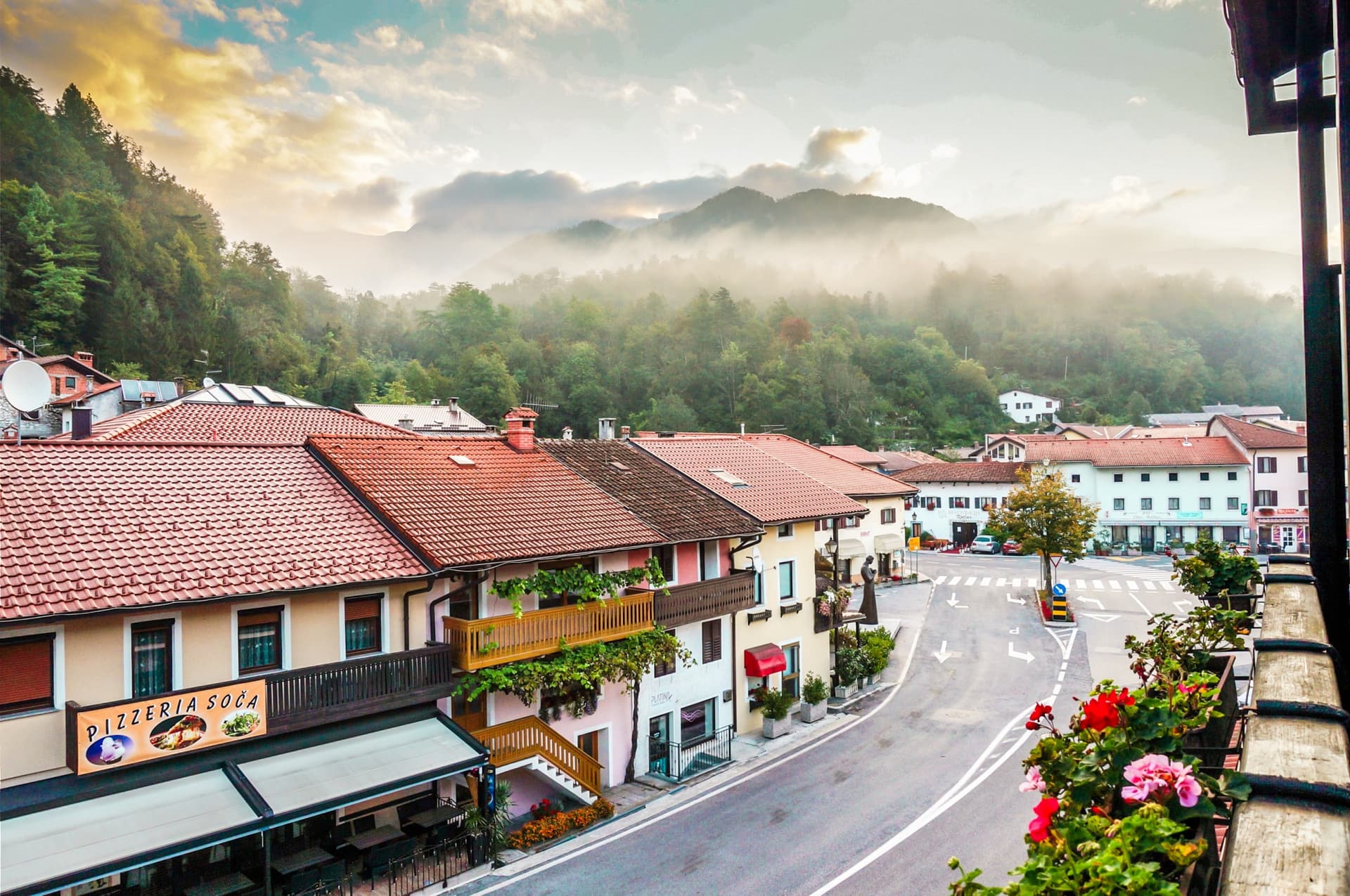
Perched at Slovenia's western edge near the Italian border, Kobarid sits among the 15 municipalities of the Goriška region. Known as "Caporetto" to Italians and "Karfreit" to Germans, this commune nestles gracefully beneath the dramatic Krn mountain chain (meaning "Black Mountain" in local parlance), which peaks at 2,244 metres within the Julian Alps. More precisely, it stands at the confluence of routes crossing the Soča Valley. This historic town is home to some 4,200 residents.
The Kobarid Historical Trail winds stage by stage above the Soča valley, stretching from the Alps toward the Adriatic. Along this path lie the remnants of the Soča Front, or Isonzo Front, where the brutal "Battle of Kobarid" (or "Battle of Caporetto") unfolded during the First World War. These vestiges represent the region's historical and cultural treasures, making Kobarid a must-see destination on any Slovenia itinerary. They rest within the mountainous landscape above the Soča (Isonzo)—that magnificent emerald-hued river cradled in the heart of the Julian Alps.
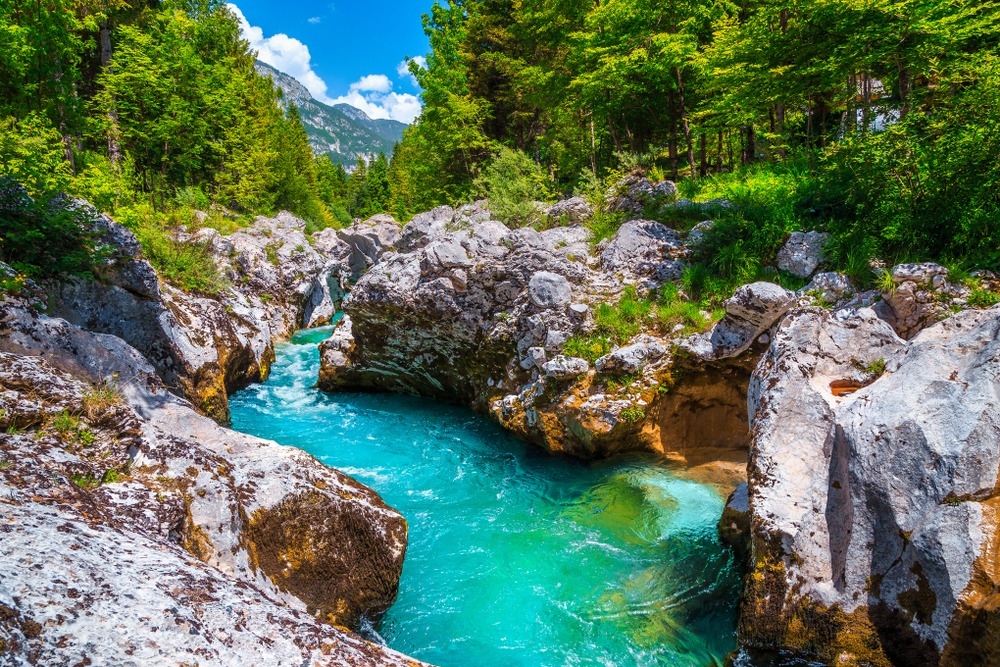
One of Europe's finest rivers, the Soča has sculpted and enriched the valley's landscape with cascades, torrents, rapids and narrow gorges carved into stone. It fuels countless outdoor pursuits throughout the region, making the valley and surroundings essential to any Slovenia journey. At Kobarid, you can engage in various water sports: canyoning, rafting, whitewater kayaking and more.
The Soča Valley's tourism boom positioned it as Slovenia's first destination to earn the title of European Destination of Excellence (EDEN).
History
Kobarid's lands were inhabited as far back as the Iron Age, with artefacts dating to the fifth century. Slavic peoples—the forebears of modern Slovenes—settled the region around the sixth century. Following Charlemagne's conquest circa 774, the territory fell under the Holy Roman Empire during the High Middle Ages. Various powers succeeded one another until administration passed to inner Austria.
It was above all during the First World War that Kobarid and the Soča Valley were profoundly shaped by history. The territory lay at the western frontier of the Austro-Hungarian Empire. From 24 October to 9 November 1917, the greatest high-altitude confrontation in human history unfolded: the Battle of Kobarid or Battle of Caporetto. This twelfth engagement on the Isonzo Front ended in devastating defeat for Italian forces against the Austro-German offensive. Kobarid's museum chronicles this epic struggle.
What to See in Kobarid
The Kobarid Museum
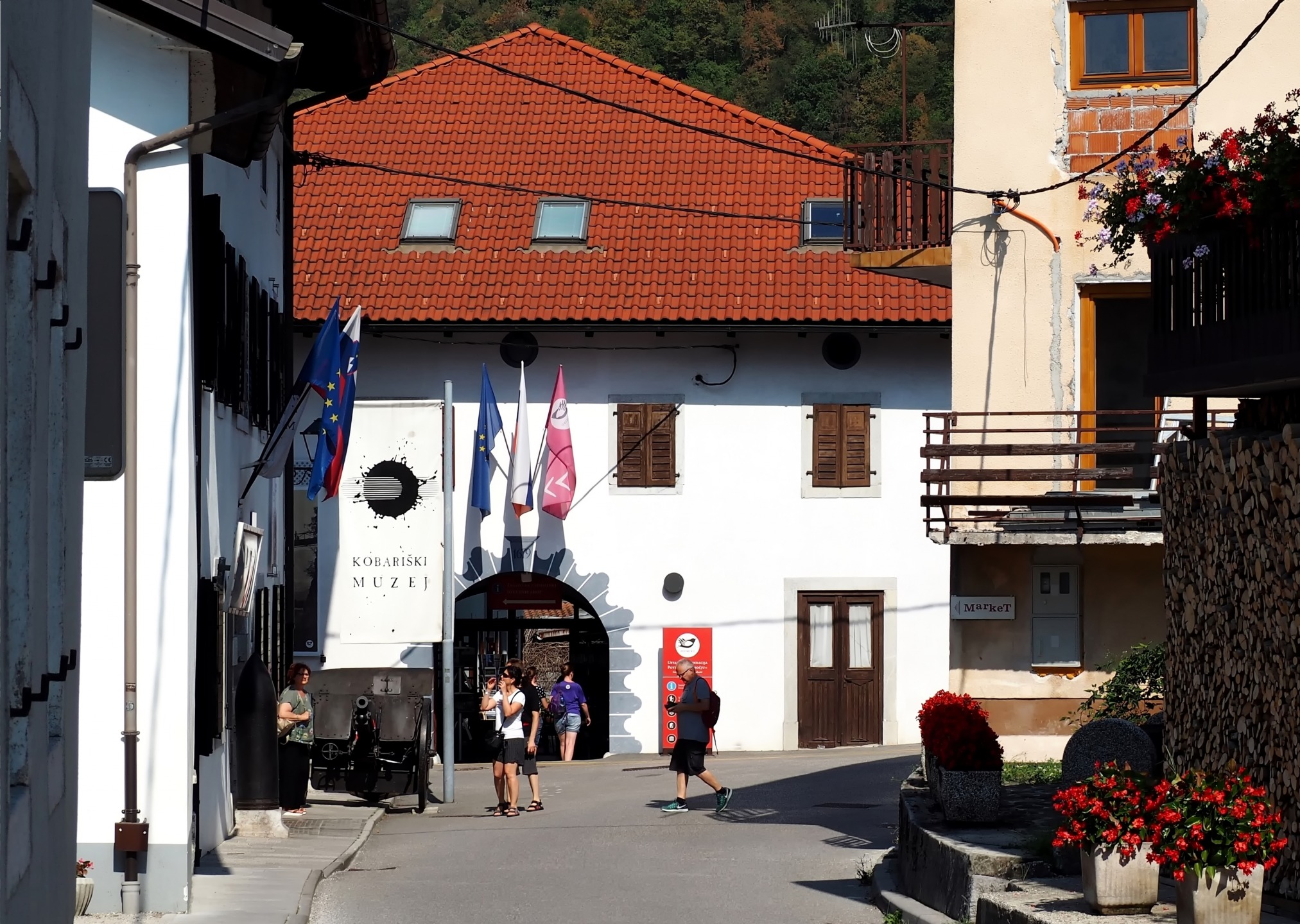
An essential stop, this museum presents exhibits chronicling the Isonzo Front across the Julian Alps. You'll trace the historical events that unfolded in the Soča Valley during the First World War. Designated a "Centre for Isonzo Front Heritage Representation," the museum has earned a stellar reputation nationally, across Europe and internationally. It has received the highest national museum certificate as well as the Council of Europe Museum Prize. It was also nominated for the European Museum of the Year Award. This is unquestionably worth your time.
The Italian Ossuary
Built around the Church of Saint Anthony and inaugurated by Benito Mussolini in September 1938, the Italian Ossuary holds the remains of 7,014 Italian soldiers. Gathered from surrounding military cemeteries, the mortal remains of soldiers—identified and unidentified alike—were transferred to this solemn site.
Tonoc Hill
Rising 412 metres and situated near Kobarid, this rocky expanse was inhabited in ancient times. Church ruins and numerous dwellings are nestled across Tonoc Hill.
The Cheese Museum
Discover the ethnological and historical collection of Kobarid at the dairy museum "Od planine do Planike." This is far more than a cheese-making tradition—it represents a living heritage of the high Alpine pastures in the upper Soča Valley. The museum's exhibits showcase ethnological displays of ancestral cheese-production methods.
During your visit, you'll have the chance to purchase the renowned Tolminc cheese, along with other regional dairy and artisanal products.
The Kozjak Waterfall
Veliki Kozjak is one of six waterfalls fed by Kozjak stream, a tributary of the Soča. This cascade tumbles within a gorge not far from Kobarid. Standing 15 metres high, Kozjak waterfall offers a breathtaking natural spectacle. Its towering dark walls, encrusted with limestone deposits like karstic caves, are framed by the emerald-green waters of the Soča. This paradisiacal spot ranks among the must-sees of this magnificent Slovenian destination.
Napoleon's Bridge
While exploring Kobarid, be sure to include the famous Napoleon's Bridge in your itinerary. The original bridge was built in 1750 and bears Napoleon's name because he and his army crossed it years later. During the First World War, the Austrians destroyed the original structure. The present bridge was erected by the Italians after the war.
What to Do in Kobarid
Soča Valley: Hiking, Cycling, Paragliding
A walk along the Kobarid Historical Trail or the "Path of Peace" is essential when visiting. Tracing the heights of the Soča Valley, it connects sites of the Soča Front, evoking the Battle of Kobarid during the Great War. Expect a journey steeped in compelling history. The route leads through numerous natural attractions, particularly waterfalls.
While in the Soča Valley, don't limit yourself to Kobarid's landscapes alone. Venture into the Bovec region, a paradise for active holidays with water sports, hiking, cycling, paragliding and countless engaging activities.
Situated at the confluence of the Soča and Tolminka rivers, the town of Tolmin is the valley's largest settlement and administrative hub. Tolmin is renowned for its music, dance and sports festivals. Standouts include the international Metaldays, Overjam International Reggae Days and Sajeta. Beyond cultural and historical heritage, natural riches enhance its appeal. You might visit the Tolminka Gorges, the Triglav National Park, and more.
The Soča River
The Soča river enables numerous water-based activities to enrich your stay in Kobarid: rafting, kayaking, canyoning, fly-fishing. The Soča trout, or marble trout, is prized by anglers worldwide. Only fly-fishing is permitted on this river.
A Gastronomic Journey
The Kobarid Gastronomic Circle brings together numerous restaurants. The world's best female chef in 2017, Ana Roš, works at one of them. With a 50-year heritage, this restaurant enriches its cuisine with regional traditions and the lush surroundings of the Soča Valley. Stop by to savour the region's signature dishes, particularly Kobarid štrukelj, a traditional dessert served in both refined establishments and rustic inns. Rest assured your culinary exploration of Kobarid will be memorable.
When to Visit Kobarid?
Kobarid can be cold, with temperatures ranging from −5 to 10°C. The best time to visit is between June and August, when weather conditions are most favourable.
From Ljubljana, you can catch a bus from Tobačna station and reach Kobarid in approximately 3 hours. Driving is faster, taking around 1 hour 40 minutes.
Want to discover this destination?
Our local advisors design your tailor-made trip.