Nova Gorica
Nova Gorica
Nova Gorica, founded after 1947 across from Gorizia, is today a symbol of European integration. Cultural Capital 2025 with its Italian neighbor, it blends socialist urbanism, royal history, and vineyards.
Nova Gorica is a Slovenian city founded after 1947 on the eastern bank of the border with Italy, facing Gorizia. Designed as a new socialist city, it shares today with its Italian neighbor a unique cross-border urban space in Europe. In 2025, the two cities are jointly designated European Capital of Culture, making it a privileged vantage point for understanding European reconciliation.
Practical Information at a Glance
- Access: Nova Gorica railway station, connections to Ljubljana and Trieste; cross-border buses to Gorizia.
- Border: Free Schengen crossing between Nova Gorica and Gorizia — no controls.
- Recommended duration: a full day to explore both sides of the border.
- Dress code: no particular constraints in the city.
What to See
The center of Nova Gorica strikes you with its rational 1950s urbanism: broad avenues, functionalist buildings, and planned green spaces. Transalpina Square (Trg Evrope on the Slovenian side, Piazza della Transalpina on the Italian side) embodies the erased border: the square's paving literally straddles the line between the two states. It is one of the most striking visual symbols of European integration.
Nova Gorica's casino (Hit Casino) is historically one of the largest in the region; it has attracted an Italian clientele for decades. The city also boasts several active contemporary art galleries, particularly around the GO! 2025 programming.
History and Context
After the Treaty of Paris in 1947, the historic city of Gorizia is awarded to Italy. Yugoslavia then builds Nova Gorica from scratch to provide Slovenia with an administrative and industrial center in this territory. A physical wall separates the two cities until 2004, when Slovenia joined the European Union, then disappears definitively with the Schengen area in 2007.
This history makes Nova Gorica a textbook case: a city born from political division, become a symbol of continental reunification.
Highlights of Your Visit
Transalpina Square
The square straddling the border is the essential starting point. A line on the ground marks the former boundary; archival photographs recall the wall that once barred it. The atmosphere is calm, almost symbolic — ideal in the early morning.
Kostanjevica Monastery
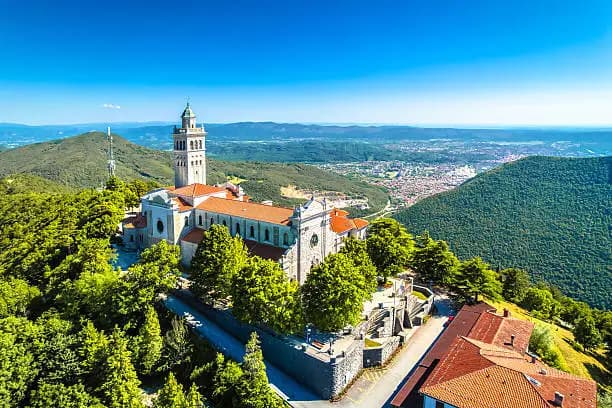
Perched on the hill overlooking Nova Gorica, this Franciscan monastery houses the vaults of the last French Bourbons in exile, including Charles X. The baroque church and convent library deserve the climb. Access is on foot from the center in about twenty minutes.
Historic Gorizia (Italian side)
Just steps away, Gorizia's medieval castle overlooks the Italian city. The walk from Transalpina Square takes less than ten minutes and offers a striking architectural contrast between socialist urbanism and Austro-Hungarian historic fabric.
GO! 2025 Programming
As European Cultural Capital 2025, Nova Gorica and Gorizia host exhibitions, concerts, and installations throughout the year. Consult the official GO! 2025 program before your visit to time your stay around an event.
Photography Tips
Transalpina Square photographs best in raking light (morning or late afternoon) to highlight the border line on the ground. From the Kostanjevica hill, the sweeping view of both cities is optimal at day's end. The functionalist facades of Nova Gorica's center offer interesting geometric framings in full sunlight.
Location and Access
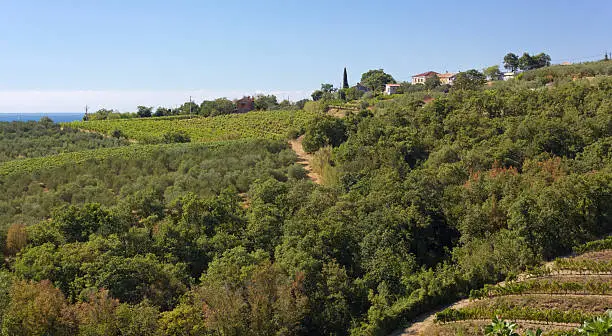
Nova Gorica is located in western Slovenia, in the Goriška region. It is connected to Ljubljana by train (approximately two hours) and to Trieste by regional connections. The border with Gorizia can be crossed on foot from the city center. The surrounding landscape — Collio and Brda vineyards — is accessible by car or bicycle.
Nearby
- Brda (Slovenian Collio) — wine region renowned for its white wines, about twenty kilometers to the north.
- Vipava Valley — vineyards and medieval villages in a characteristic windy valley.
- Idrija — former mercury mining town listed by UNESCO, about an hour to the east.
- Škocjan Caves — UNESCO natural site, accessible in less than an hour to the southwest.
Frequently asked questions
No. Both cities are in the Schengen area; the crossing is free with no controls. An ID card is sufficient, as for any travel within the Schengen zone.
Spring and autumn offer pleasant weather and the surrounding vineyards are in activity. In 2025, GO! European Cultural Capital programming runs throughout the year.
Yes, easily. The Slovenian Brda wine region is about twenty kilometers to the north. A rental car allows you to visit both in a day.
Train connects Ljubljana to Nova Gorica in approximately two hours. Bus connections also exist. Nova Gorica station is close to the city center.
The monastery welcomes visitors to the church and royal vaults, but opening hours vary. It is advisable to check with the local tourist office before visiting.
Yes. The city is flat and easy to walk around. The symbolic crossing of the border at Transalpina Square is an educational experience children enjoy.
Want to discover this destination?
Our local advisors design your tailor-made trip.