Julian Alps
The Triglav massif, its glacial lakes and the turquoise Soča Valley, within an 840 km² national park between Italian and Austrian borders.
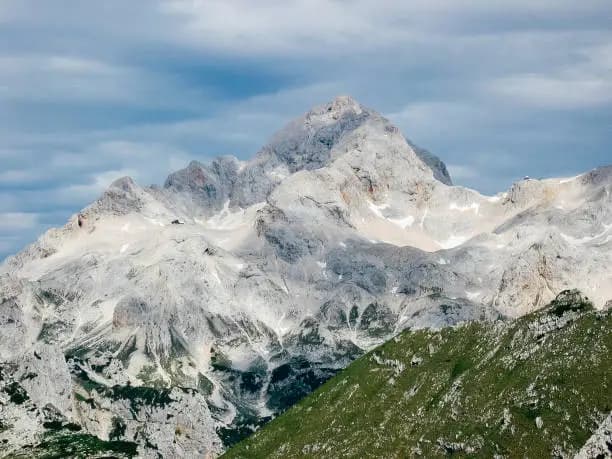
The Julian Alps occupy the northwest corner of Slovenia, bordering Italy and Austria. Triglav National Park, established in its current form in 1981, covers 840 km², or 4% of the country's territory. The massif is organized around Triglav (2,864 m), the nation's highest peak, whose three-peaked silhouette adorns the Slovenian flag. From our agency in Ljubljana, we reach Bled in 50 minutes via the A2 motorway, and Bovec to the west in 2.5 hours via the Vršič Pass or by detour through Tolmin.
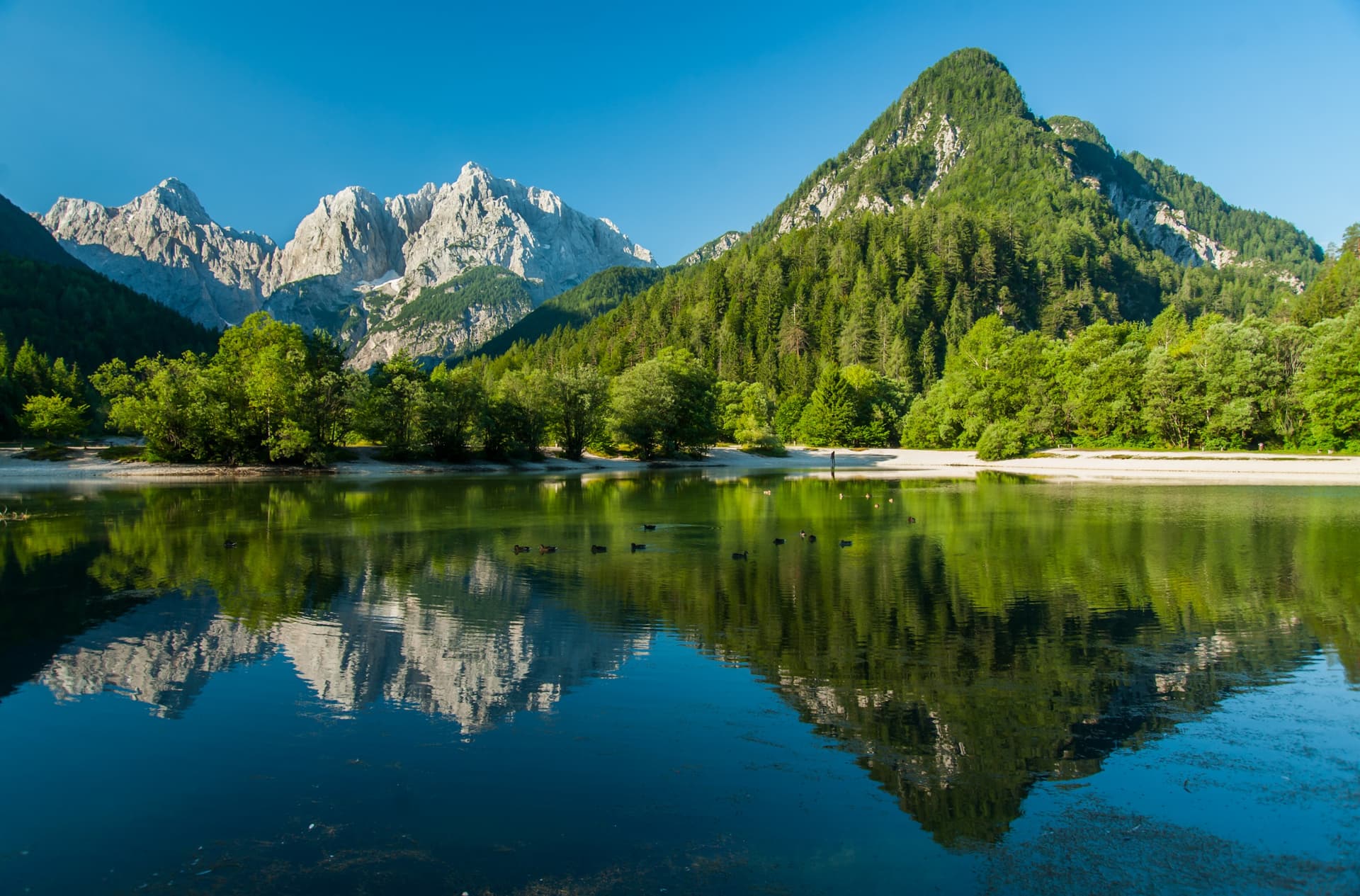
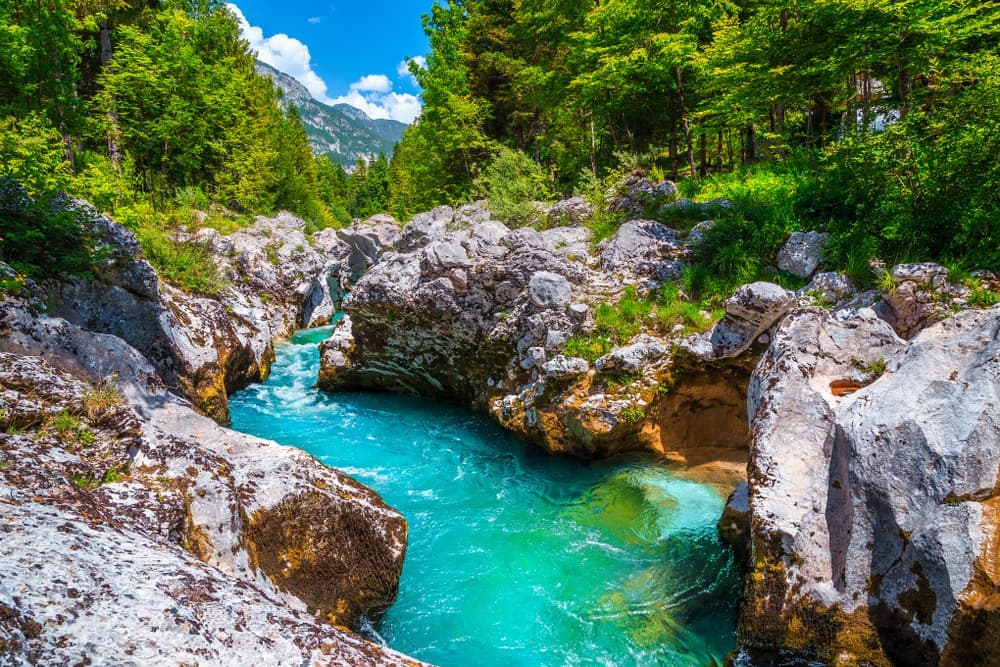
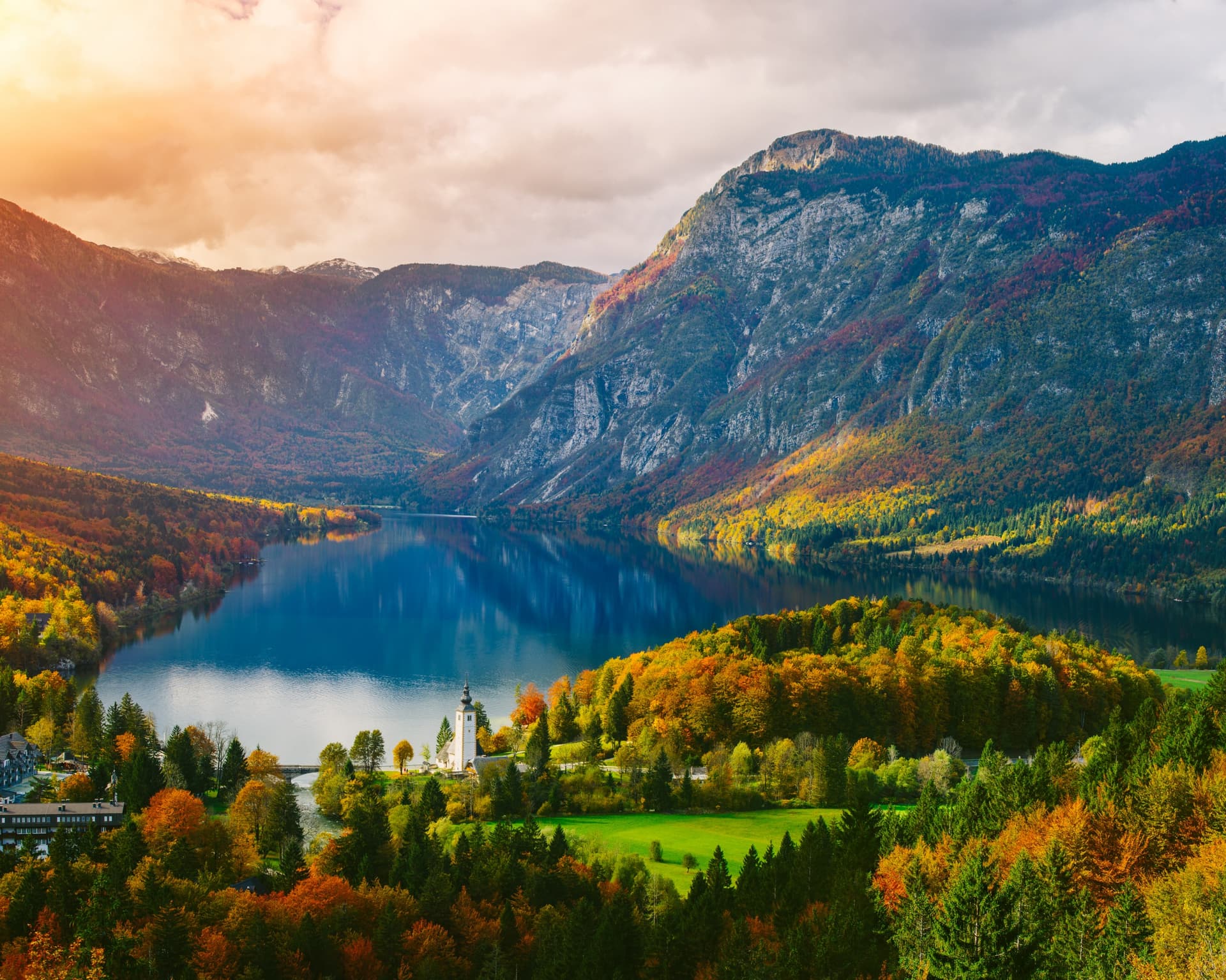
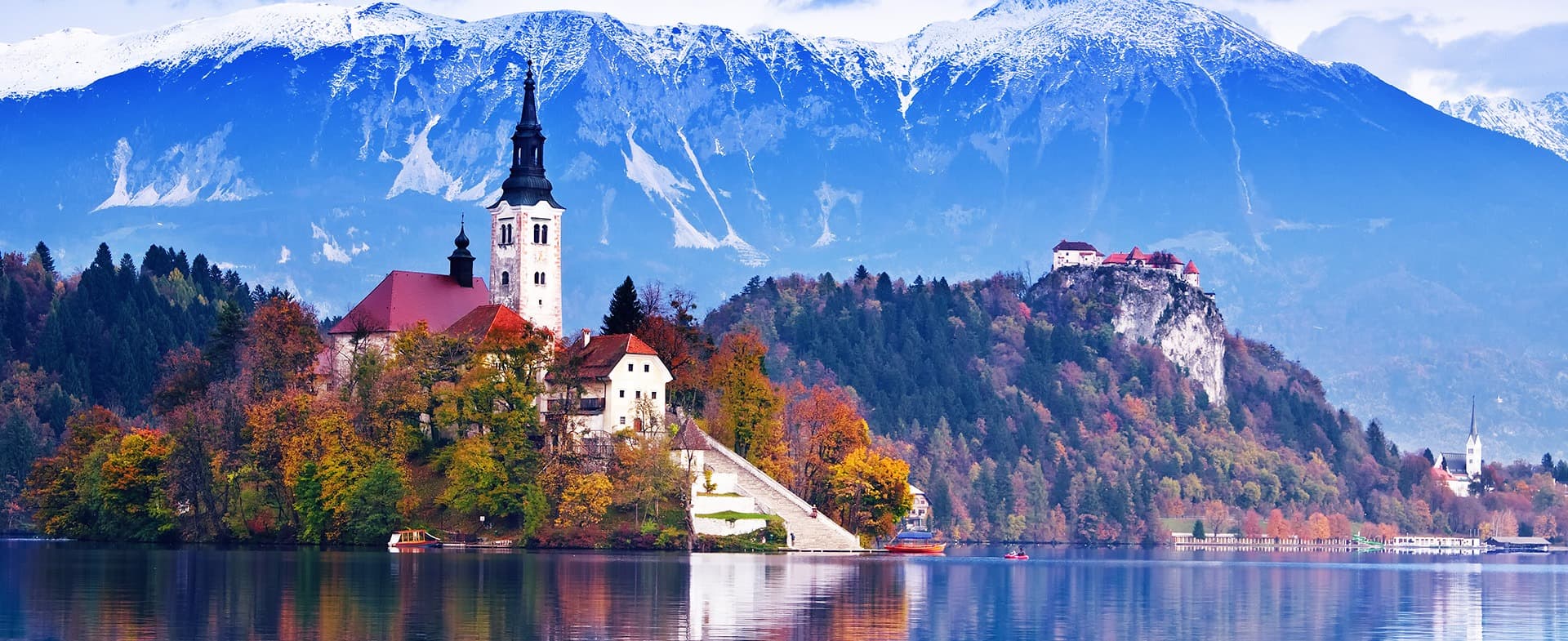
Geology dictates everything here: Triassic limestone rocks, U-shaped glacial valleys, morainic lakes. Lake Bled, 2,120 m long and 30 m deep, harbors a Baroque church on its sole island. Some 26 km to the southwest, Lake Bohinj, four times larger, remains fringed by forests and hamlets of herders such as Stara Fužina and Studor, where the kozolci—characteristic hay-drying racks of the plateau—still stand. Further west, the Soča carves a valley spanning 138 km from its source at 1,050 m near Trenta to the Friuli plain, its water a striking turquoise from suspended limestone particles.
The climate is humid alpine: between 1,200 and 3,000 mm of annual precipitation depending on altitude, among the highest in Central Europe. Summers register 22–25 °C in valley bottoms, 10–15 °C around 2,000 m. Winters bring lasting snow to north-facing slopes from December onward. The Vršič Pass, at 1,611 m, connects Kranjska Gora to Trenta via 50 paved hairpin turns built by Russian prisoners in 1915–1916, and closes from November to May depending on snowfall.
This region bears the scars of the Isonzo Front between 1915 and 1917: 300,000 casualties spread across twelve battles between Italians and Austro-Hungarians. The Kobarid Museum, opened in 1990, chronicles this history with museography recognized by the Council of Europe. Hemingway, an ambulance driver on this front, would later draw on it for A Farewell to Arms. The Peace Trail (Pot miru), marked across 230 km, still winds through trenches, dugouts and military cemeteries.
Local economy blends alpine herding, forestry and tourism. On the Bohinj pastures, artisans still produce mohant, a pungent soft-ripened cheese, and sir bohinjski, milder in character. In Bled, kremšnita—a mille-feuille layered with vanilla cream and whipped cream—has been served since 1953 at the Park Hotel. In the Soča Valley, the endemic marble trout (Salmo marmoratus) is fished under strict quotas between April and October. The village of Kobarid hosts three acclaimed restaurants, one of which specializes in frika, a potato and cheese galette typical of Slovenian Friuli.
Beyond the Bled-Bohinj-Soča trio, the region harbors lesser-known corners that our English-speaking team happily favors: the Trenta Valley and its Juliana alpine botanical garden, the Pokljuka Plateau at 1,350 m with its spruce forests and peat bogs, or the Tolmin Gorges, narrower and less frequented than the better-known Vintgar Gorge near Bled.
To Discover
Lake Bohinj and Pokljuka Plateau. A 12 km lap of the lake on foot or by bike, followed by a cable car ride to Vogel (1,535 m) for views across the Triglav massif. The Pokljuka Plateau, 30 minutes away, offers forest trails and pastures where Cika cattle and summer herders still roam.
Soča Rafting from Bovec. Our English-speaking team guides 8–10 km descents between Boka and Trnovo ob Soči, Class III–IV depending on water levels. Water temperature stays at 8–12 °C even in July; wetsuits provided.
Vršič Pass and Trenta Valley. A journey across the 50 hairpin bends between Kranjska Gora and Trenta, with stops at the wooden Russian chapel of 1916 and the Soča source, reachable by 20 minutes of scrambling on fixed ropes.
Kobarid Museum and Isonzo Front. Three hours of visits to grasp the twelve battles of 1915–1917, extended by a 5 km hike toward Kozjak waterfall and Italian positions on Kolovrat.
Mount Triglav Trails. A two-day ascent from Pokljuka or the Seven Lakes Valley, overnight in a mountain hut (Triglavski dom na Kredarici, 2,515 m), with cables over the final 200 meters. Reserved for experienced hikers, July to September.
When to Go
The best season runs from mid-June to mid-September. High-altitude trails are snow-free from late June onward, mountain huts operate between June 20 and September 20 depending on snow, and the Vršič Pass is passable. July and August draw peak crowds, especially around Bled: we suggest staying in Bohinj or Kobarid rather than Bled itself. September offers a sweet spot, with valley temperatures of 18–20 °C, forests turning gold by month's end, and trails less crowded. May and early June remain wet (up to 200 mm over the month at Bovec) but suit gorge and lake exploration.
From November to April, the Vršič Pass closes, several high valleys become inaccessible by car, and activity shifts to Kranjska Gora and Vogel ski resorts. Bled and Bohinj remain visitable in winter, with daytime temperatures of -2 to 5 °C and Lake Bohinj occasionally frozen at the surface in January–February. Avoid November, the wettest and least sunny month (up to 350 mm precipitation).
Practical Advice
Allow 4–5 days minimum to traverse the Bled, Bohinj and Soča Valley trio without haste, with a night in Bovec or Kobarid. A week allows you to add an ascent, Pokljuka Plateau or a Peace Trail route. Ljubljana Airport, 35 km from Bled, serves as the natural entry point; from Venice Marco Polo, allow 3 hours' driving via Tarvisio and Kranjska Gora. The region is straightforward by car, more constrained by public transport beyond Bled and Bohinj.
The Julian Alps pair logically with the Soča Valley and Goriška to the southwest, which continue the descent toward Brda vineyards and the Italian border, or with Ljubljana and the center for 2–3 days of urban culture and heritage before or after the mountains. Comfort ranges from rustic mountain huts to well-appointed farmstays in the valleys and a few historic hotels in Bled. The region suits hikers, families in summer (swimming at Bohinj, cycling around Bled, zip lines at Bovec) and contemplatives off-season; we advise against it for travelers seeking dry, stable weather.