Soča Valley and Goriška
From turquoise Soča beneath Triglav to the vineyards of Goriška Brda, 138 km crossing the Isonzo front and shifting from the Alpine world to the sub-Mediterranean.
The Soča rises beneath Triglav at roughly 1,050 meters elevation in the Trenta valley, then descends 138 kilometers to the Friuli plain where it becomes the Italian Isonzo. Its turquoise hue comes from fine calcite particles in suspension, particularly striking between Bovec and Tolmin. It is one of Europe's rare rivers to hold this color along nearly its entire length, and the endemic marble trout, marmorata, draws fly fishers from around the world under strict permit regimes issued by the local foundation.
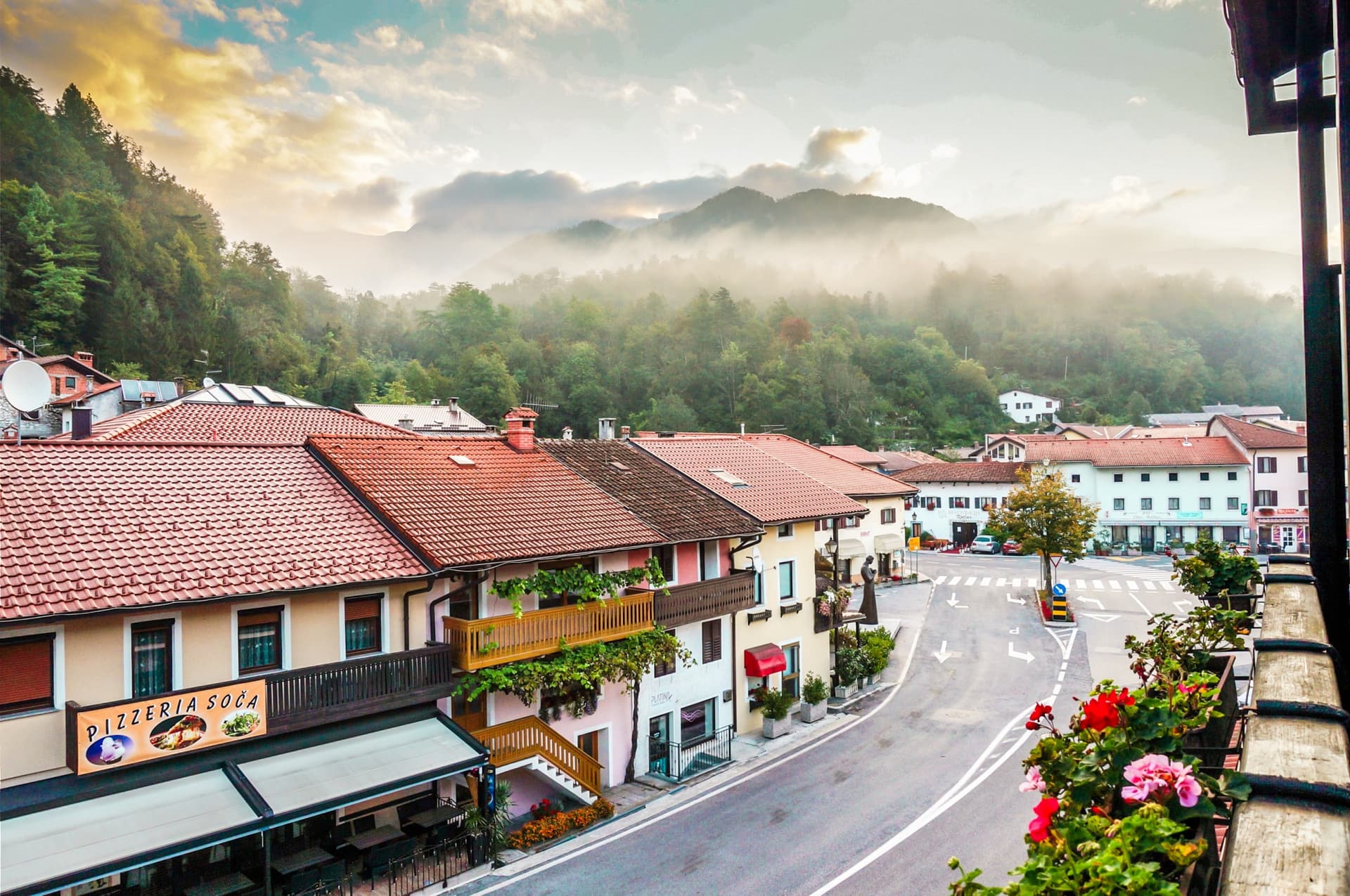
The upper valley, around Bovec, is framed by the peaks of Kanin (2,587 m) and Krn (2,244 m). Lower down, at Kobarid and Tolmin, the terrain softens, the valley broadens, and gives way to meadows and scattered hamlets. These villages carry a dense history: between May 1915 and October 1917, the Isonzo front saw twelve successive battles between Italian and Austro-Hungarian armies, claiming over 300,000 lives. The Kobarid Museum, awarded the Council of Europe Prize in 1993, traces this episode through maps, objects, and testimonies, and a marked trail, the Trail of Peace, connects the remnants of trenches, fortifications, and cemeteries over several days of walking.
To the south, the Vipava valley opens another world. The terrain flattens, the climate becomes sub-Mediterranean, and vineyards blanket the flysch hillsides between Vipava, Branik, and Goriška Brda. Structured white wines are produced here—Rebula (Ribolla Gialla), Zelen, Pinela—as well as long maceration wines in the tradition shared by neighboring Collio growers in Italy. Several estates work with certified biodynamic practices, among them Movia at Ceglo and Burja at Vipava. The villages of Šmartno and Dobrovo, in the Brda, line stone houses, olive trees, and cherry orchards: the cherry harvest in June spawns the Češnja festival.
The region's climate plays between two influences. Upper Soča receives up to 3,000 mm of rainfall annually, among the highest in Central Europe, with thunderstorms common on summer afternoons. The Vipava valley, by contrast, is swept by the bora, a katabatic northeast wind descending from the Karst plateau and regularly reaching 150 km/h in winter gusts, sometimes exceeding 200 km/h in the corridors around Ajdovščina. This wind dries the soil, shapes viticulture, and imposes roofs weighted with stones in certain exposed hamlets.
At table, the region blends Alpine, Slavic, and Friulian influences. At Kobarid, Ana Roš's trattoria Hiša Franko (two Michelin stars) put Soča cooking on the international map, yet one eats equally well in family gostilne: frika with Tolminc PDO cheese, herb štruklji, Kobarid-style štruklji with walnuts and raisins. The dairies of Tolmin still transform milk from herds summering on the Kuhinja plateau.
Our Ljubljana team programs active stays here (Class III-IV rafting between Bovec and Trnovo, kayaking, canyoning in the Sušec) as well as slower itineraries centered on front-line heritage and wine estates. The region lends itself to a journey descending from the Alpine north toward the Mediterranean south over 4 to 6 days, with a striking shift in landscape and atmosphere between Bovec and Goriška Brda.
To discover
The color of Soča at Velika Korita. Over 750 meters downstream from Bovec, the river has carved a narrow canyon where turquoise water flows between polished limestone walls. Trail access in 20 minutes from the Soča bridge.
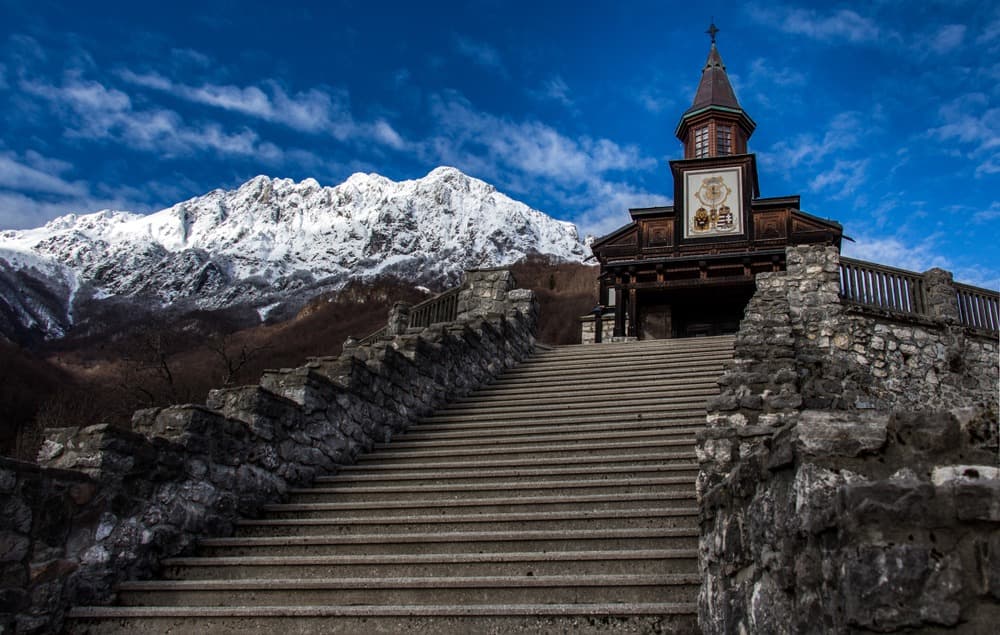
Kobarid Museum and Trail of Peace. The museum traces the twelve Isonzo battles (1915–1917). On foot, a 3-hour loop connects the Italian trenches of Kolovrat and the Kobarid ossuary built by Mussolini in 1938.
Tastings in Goriška Brda. The perched villages of Šmartno and Medana shelter biodynamic growers producing Rebula and orange maceration wines. Cellar visits by appointment, farmhouse meals in osmice opened by producers.
Rafting and kayaking between Bovec and Trnovo. Over 10 kilometers, a Class III run with a few Class IV passages in spring. Water temperature does not exceed 12°C in summer; neoprene suits provided by local operators.
Dairies of the Tolmin valley. Tolminc PDO is produced at altitude on the Kuhinja plateau between June and September. Visits to working alpine dairies accessible on foot from the hamlet of Stara Fužina.
When to go
The best period for the upper Soča runs from late May to mid-October. May and June offer high water flow ideal for rafting (snowmelt) and daytime temperatures of 18–22°C at Bovec, though nights remain cool at altitude. July and August reach 25–28°C in the valley, with nearly daily thunderstorms in late afternoon and marked tourist traffic at water sports bases. September is our favorite month: 20–24°C, water still swimmable in pools, raking light on the peaks, and early autumn colors from mid-September around 1,500 m. October suits hiking the Trail of Peace and vintage time in Brda, though first snows may close the Vršic Pass by month's end.
Winter (December to February) remains relevant only for cross-country skiing at Bovec or Vipava caves, provided you accept the bora wind, which can block the Razdrto-Vipava highway for several days yearly. March and April are best avoided except for fishing: melting snow, muddy trails, many mountain refuges still closed above 1,200 m.
Practical advice
We recommend 4 to 5 full days for the region: 2 days around Bovec and Kobarid (Soča, museum, hiking or rafting), 1 transition day via Vršic Pass or Tolmin, then 2 days in Vipava and Goriška Brda for tastings and hilltop villages. The simplest logistical entry point is Ljubljana airport (Brnik), 2h15 driving from Bovec via Kranjska Gora and the Vršic Pass in summer, or 2h30 via Idrija outside season when the pass is closed. Trieste-Ronchi airport (Italy) is 45 minutes from Goriška Brda, an interesting option for trips combined with the Veneto.
The region naturally connects with the Julian Alps to the north via the Vršic Pass (1,611 m) or the Bohinj valley. To the south, the Karst and Istrian coast are under an hour from Vipava: tastings in Brda and Škocjan caves often happen the same day. Hotel comfort remains modest but well-appointed: family guesthouses, a few boutique hotels in Kobarid and the Brda, working agritourism properties. The region suits hikers, whitewater enthusiasts, military history fans, and wine lovers. For families, we favor the Kobarid base, better equipped and gentler than Bovec in terms of activities.