Diving in Slovénie: the best spots
Wondering where to dive on a trip to Slovénie? It's along the coast, around the town of Piran, that you'll find the best diving spots.
Wondering where to dive on a trip to Slovénie? It's along the coast, around the town of Piran, that you'll find the best diving spots. It's also here that you can do wreck diving. To experience something different and discover another aquatic world, venture inland for freshwater diving in the heart of the country's most beautiful lakes. We take you to discover Slovénie's most stunning dive sites.
The best saltwater diving sites in Slovénie
Most of Slovénie's best diving spots are located between the town of Piran and Strunjan. Here, the Adriatic Sea is home to a rich variety of marine life including squid, octopus, cuttlefish, gobies, lobsters, sea bass, seahorses, and much more. Here are the most beautiful dive sites to explore along the Slovenian coast:
Fiesa Reef
Located east of Piran, opposite Fiesa Beach, Fiesa Reef is one of Slovénie's most popular diving spots. It offers a condensed version of everything that underwater diving has to offer in Slovénie: rich marine life and numerous wrecks.
The site is particularly renowned for the presence of numerous seahorses, but you can also observe lobsters, conger eels, squid, octopus, cuttlefish, crabs, and nudibranchs. As for wrecks, there are around fifteen of them, where you can see old cars and scooters.
With depths ranging between 3 and approximately 20 meters, Fiesa Reef generally offers excellent visibility. Access is easy since diving is done from the shore. For all these reasons, it's a diving spot popular with both beginner and experienced divers.
Good to know:
Fiesa Reef is an excellent night dive spot. In fact, it's the best time to observe squid, octopus, and lobsters in action! These species emerge from their hiding places once night falls to feed.
Punta Reef

Also known as Punta Madonna, Punta Reef is also one of Slovénie's best diving spots. Accessible from Piran, the site features an interesting geological structure inhabited by numerous species such as lobsters, conger eels, octopus, sculpins, wrasse, damsels, gobies, blennies...
Punta Reef is divided into 2 sections: the north side and the south side. The north side is characterized by depths varying between 5 and 22 meters. The south side doesn't exceed 12 meters depth. Depending on conditions (current, swell, southerly wind...), there may be poor visibility on one section of the reef. In that case, simply head to the other side, because when one doesn't offer good diving conditions, the other is usually spared.
Punta Reef is accessible to both beginner and experienced divers.
Piran Church

Beneath Piran Church lies a dive spot offering excellent conditions. The reef begins at approximately 5 meters depth just below the church and continues with a gentle slope until reaching about twenty meters depth.
Along the reef, you can admire beautiful soft corals, conger eels, lobsters, scorpionfish, brown groupers, cuttlefish, nudibranchs, and much more. Seahorses and eagle rays have already been spotted at the site.
Benefiting from minimal current and shallow depth, Piran Church is an excellent diving spot for beginners. Its sandy bottom also provides an opportunity to improve buoyancy control and advance your skills. It's therefore a diving spot suitable for all levels.
Piran Stadium
The Piran Stadium site offers diving conditions similar to that of Piran Church. You'll find a small reef where numerous fish and other marine creatures live, as well as the wreck of a sunken sailboat.
Its shallow depth (approximately 15 meters maximum) makes it an excellent diving site for beginners. Experienced divers, on the other hand, may find it dull and would be better served by diving at Fiesa Reef, Punta Reef, or one of the region's wrecks.
Maona Rossa Wreck
The Maona Rossa wreck is a 34-meter-long boat that was sunk by a submarine mine during World War II in the Gulf of Piran. You can actually see the remains of 3 other mines around the site. Together they form the habitat of several marine species: crabs, lobsters, conger eels, squid, nudibranchs...
As for the wreck itself, it's a cargo transport vessel. The ship is a barge-type vessel, meaning it doesn't have automatic propulsion and needs to be towed by another ship.
The Maona Rossa wreck is located at 21 meters depth with its top section at 18 meters. This dive is rather reserved for advanced divers and those wishing to earn their wreck specialty certification.
Although a boat is required to access it, the Maona Rossa wreck is very easy to reach. This makes it one of Slovénie's most popular dive sites. Note that visibility is not renowned for being ideal.
KEC Wreck (DTM)
Also known as DTM, the KEC wreck is a former World War II military transport and fast landing craft vessel. It was sunk in spring 1945 (probably by an aerial bomb), between Piran and Strunjan.
The KEC wreck rests at 24 meters depth and is partially buried. Its peculiarity? The ship is upside down, which makes the experience unique for divers. You can actually access the interior of the boat through small openings and explore the cabin along its entire length. Inside the wreck, you can observe numerous fish (such as conger eels and sea bream) as well as lobsters.
Although it can reach 10 meters, visibility around the wreck is not always good. Exploring the wreck's interior requires excellent buoyancy control. For all these reasons, the DTM wreck site is reserved for experienced divers. It's also an excellent spot to earn your wreck specialty certification.
The best freshwater diving sites in Slovénie
Fancy an unusual diving experience? Then why not try freshwater diving in one of the most beautiful lakes in Slovénie? Here are the best sites for lake diving during a trip to Slovénie:
Lake Bled

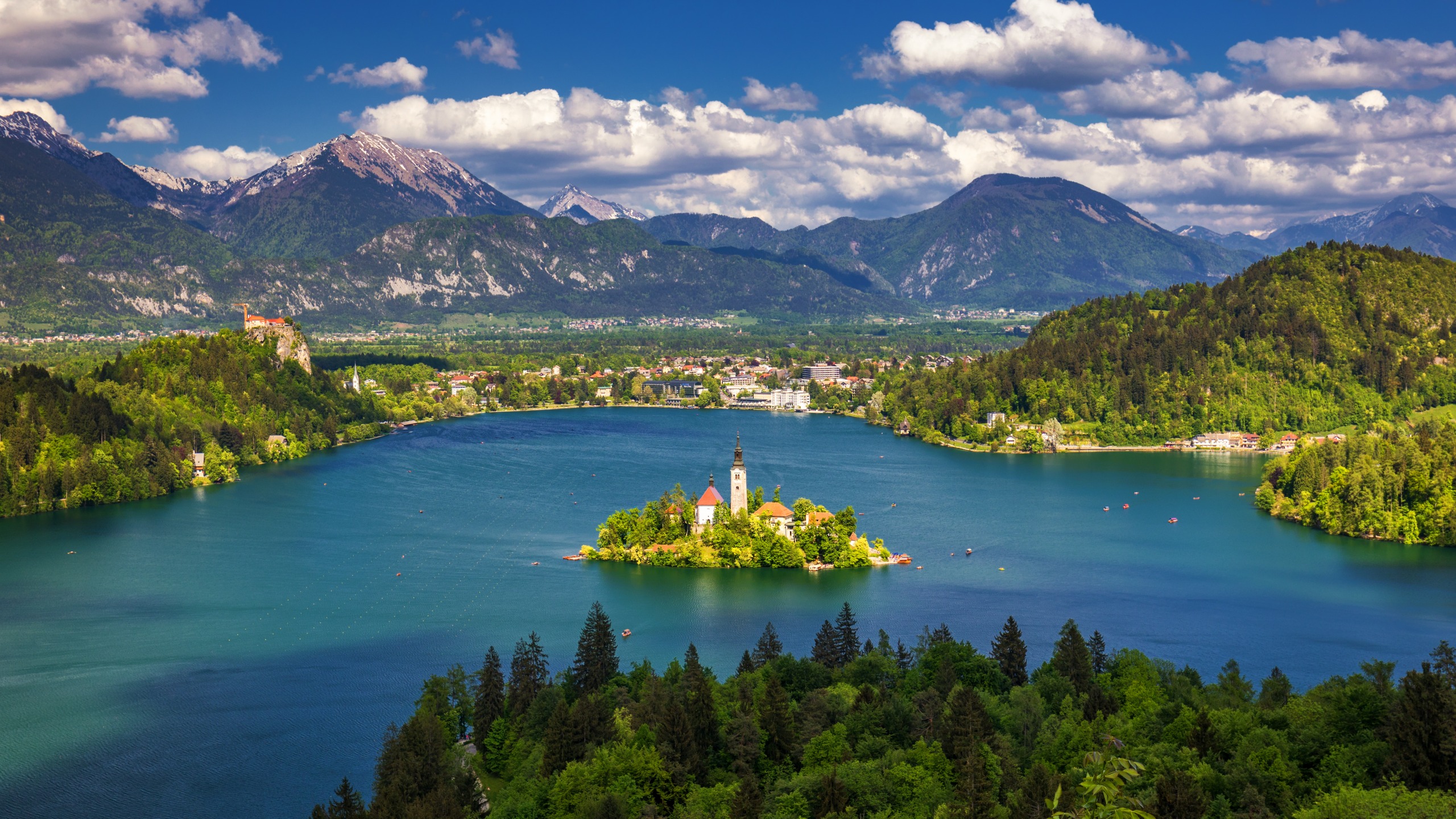
Lake Bled is among the most beautiful landscapes to see in Slovénie. It's home to theBled Island (Slovénie's only island) and its iconic church, as well as the famous Bled Castle built on a cliff face. But did you know that exploring Lake Bled isn't only done on land and that it's possible to dive in the lake?
With an area of 1.45 km² and a maximum depth of 30 meters, Lake Bled is home to several dive sites. In total, 18 fish species are recorded there, among which you can observe carp, pike, lake trout, zander, perch, catfish... You'll also find crabs, crayfish, shellfish, and beautiful aquatic plant species (algae, white and red water lilies, reeds...).
As for diving conditions, Lake Bled is suitable for all diving levels: beginner and experienced alike. One thing is certain: a dive in Lake Bled allows you to discover an unexpected aquatic world that's completely different from what you're used to seeing in saltwater!
Good to know:
Lake Bled's average annual temperature is 12 °C. It can reach 21/22 °C in July. If you're sensitive to cold, it's better to plan a dive during summer.
Lake Bohinj

Located in the heart of Triglav National Park, not far from Lake Bled, Lake Bohinj is one of the country's main tourist sites, although it's much less crowded than the former. With an area of 3.18 km² and a maximum depth of 45 meters, it's Slovénie's largest lake.
Diving in Lake Bohinj is an opportunity to discover a mysterious aquatic world where 65 algae species, 8 mollusk species, and 5 fish species flourish. The fish species are: lake trout, burbot, chub, minnow, and Arctic char.
As for diving conditions, the average annual temperature is 8.5°C. It can rise to 17°C in July. Be prepared to don thick or even dry suits and discover new sensations!
To go further...
If you enjoy freshwater diving, other sites may appeal to you. Indeed, it's possible to dive in the Soca River and Kolpa River. You'll also find underground diving sites at Postojna, Skocjan, and in the Wild Lake tunnel.
What is the best time to dive in Slovénie?
Underwater diving can be practiced almost year-round in Slovénie, provided you're well-equipped to handle the cold. Generally speaking, whether you want to dive in the open sea or freshwater, the best time to dive in Slovénie is summer, from May to September. If you're really sensitive to cold, opt for July and August when the water temperature (sea and lakes) is at its peak.