Slovenian Wines: Discovering Slovenian Vineyards
Slovenian wines remain largely unknown today. Yet, the culture of viticulture in Slovénie possesses a rich history: it dates back to the Celtic era.
Slovenian wines remain largely unknown today. Yet, the culture of viticulture in Slovénie possesses a rich history: it dates back to the Celtic era. Blessed with multiple climates, Slovénie offers an impressive variety of wines with over fifty grape varieties. We invite you to discover Slovenian wines during an oenological getaway.
What are the main wine regions of Slovénie?
Slovénie has 3 main wine regions:
1. The Primorska wine region

Bathed in a temperate Mediterranean climate, Primorska is Slovénie's warmest wine region. It is also the one that records the greatest diversity of wines. While Slovénie is primarily renowned for its white wines, red wines hold a special place in Primorska. Its proximity to Italy's Friuli region has much to do with this. For wine enthusiasts, it is undoubtedly Slovénie's finest wine region. It is home to the most awarded wines and winemakers.
Spotlight on typical wines of the Primorska wine region:
Teran,
Rebula,
Malvazija,
Refošk,
Pinela...
It's worth noting that the Goriška Brda region is also renowned for its orange wine production, a wine obtained by fermenting whole white grapes (with skins and seeds) in amphorae. These are then macerated for 6 to 8 months. Orange wine owes its color to polyphenols derived from the grape skin.
Among the best wine sites in Primorska, we can mention:
Brda: renowned for its full-bodied yet lively wines with aging potential, featuring grape varieties such as Chardonnay, Rebula, Merlot and Cabernet Sauvignon...
Vipavska dolina (Vipava Valley): where you'll find wines based on Merlot and Sauvignon, as well as heirloom varieties such as Rebula, Istrian Malvoisie, Pinela, indigenous Zelen and even Welschriesling.
Kras (the Karst): here, the vineyards experience alpine influences and you'll find primarily the red Refošk grape but also white varieties including Istrian Malvoisie and the indigenous Vitovska Grganja.
Slovenska Istra (Slovenian Istria): located on the Adriatic coast, it is Slovénie's sunniest and warmest wine region. The most represented varieties are the red Refosco grape and Istrian Malvoisie.
2. The Podravje wine region
Located south of Austria, the Podravje wine region is home to Slovénie's largest wine area. Wine has thrived here since Roman times. You'll even find the world's oldest vine here. Blessed with a continental climate, you'll find superb white wines from various grape varieties such as Welschriesling, Sauvignon, Rhine Riesling, Chardonnay, Šipon (a regional specialty) and Yellow Muscat. For reds, Blaufränkisch, Pinot Noir and žametna črnina are most represented.
Typical wines of the Podravje wine region:
Šipon,
Welschriesling,
Ranina,
Gewurztraminer,
Blaufränkisch...
The Podravje wine region is divided into 2 vineyard terroirs:
Prekmurje: renowned for its rich and full-bodied wines with a predominance of white varieties, although indigenous Blaufränkisch is increasingly used for red wine production.
Štajerska Slovenija: arguably one of the wine regions best known to travelers, as it is home to the sublime terraced vineyards of Jerusalem, the world's oldest vine in Maribor, and the oldest preserved Slovenian wine bottle (Golden Vine from 1917) in Ptuj.
Focus on the world's oldest vine in Maribor:
For over 450 years, Maribor's city center has been home to the world's oldest vine. Planted in the late Middle Ages, the old vine still produces up to 55 kilograms of red grapes each year. Listed in the Guinness Book of Records, the Žametovka or modra kavčina vine even has its own anthem. To learn more, you can visit a dedicated museum in the Old Vine House.
3. The Posavje wine region

Dotted with hills, the Posavje wine region is renowned for its sweet, light and slightly tart wines. You'll find roughly the same grape varieties as in Podravje. What sets the region apart? Its unique blends such as the famous cviček rosé wine, the Bizeljean or the Metliska Crnina. It is also the region with the most PTP (Priznano Tradicionalno Poimenovanje, recognized traditional local designation) appellation wines.
Typical wines of the Posavje wine region:
Cviček,
Metliška črnina,
Belokranjec,
Bizeljčan,
Modra frankinja...
The Posavje wine region is divided into 3 vineyard terroirs:
Dolenjska: considered Slovénie's coldest wine region, it primarily produces Cviček. Winemakers also use Blaufränkisch and Sauvignon Blanc varieties.
Bizeljsko-Sremič: the majority of production concerns red and white Bizeljčan. The region is also known for its repnice, caves over 200 years old carved into quartz sand that were once used to store turnips and are now used as bottle storage facilities.
Bela Krajina: known for its light wines such as Belokranjec (white) and Metliška Črnina (red), this region produces a predicate wine, made from noble rot grapes.
How to discover Slovenian wines during a trip to Slovénie?
Whether you're a wine enthusiast or not, discovering Slovenian wines is an experience worth having during a trip to Slovénie. To do so, several options are available to you:
Cellar visits and tastings
Taking the wine road and stopping at vineyards to visit the cellars and participate in a tasting is the best way to discover Slovenian wines. Most winemakers will open their doors to let you taste their beverages. For an unusual experience, you can even arrange a tasting in a repnice (old turnip cellar) or enjoy a wine tasting in the dark as is possible in a tunnel beneath the Ptuj castle...
Discovering Slovenian vineyards by bike

How about discovering Slovenian vineyards by bike? Embarking on an oenological road trip during a cycling adventure in Slovénie, you'll have the chance to explore the sublime landscapes of the country's wine roads and the opportunity to stop freely wherever you wish to taste wines directly at the vineyards.
Our tip:
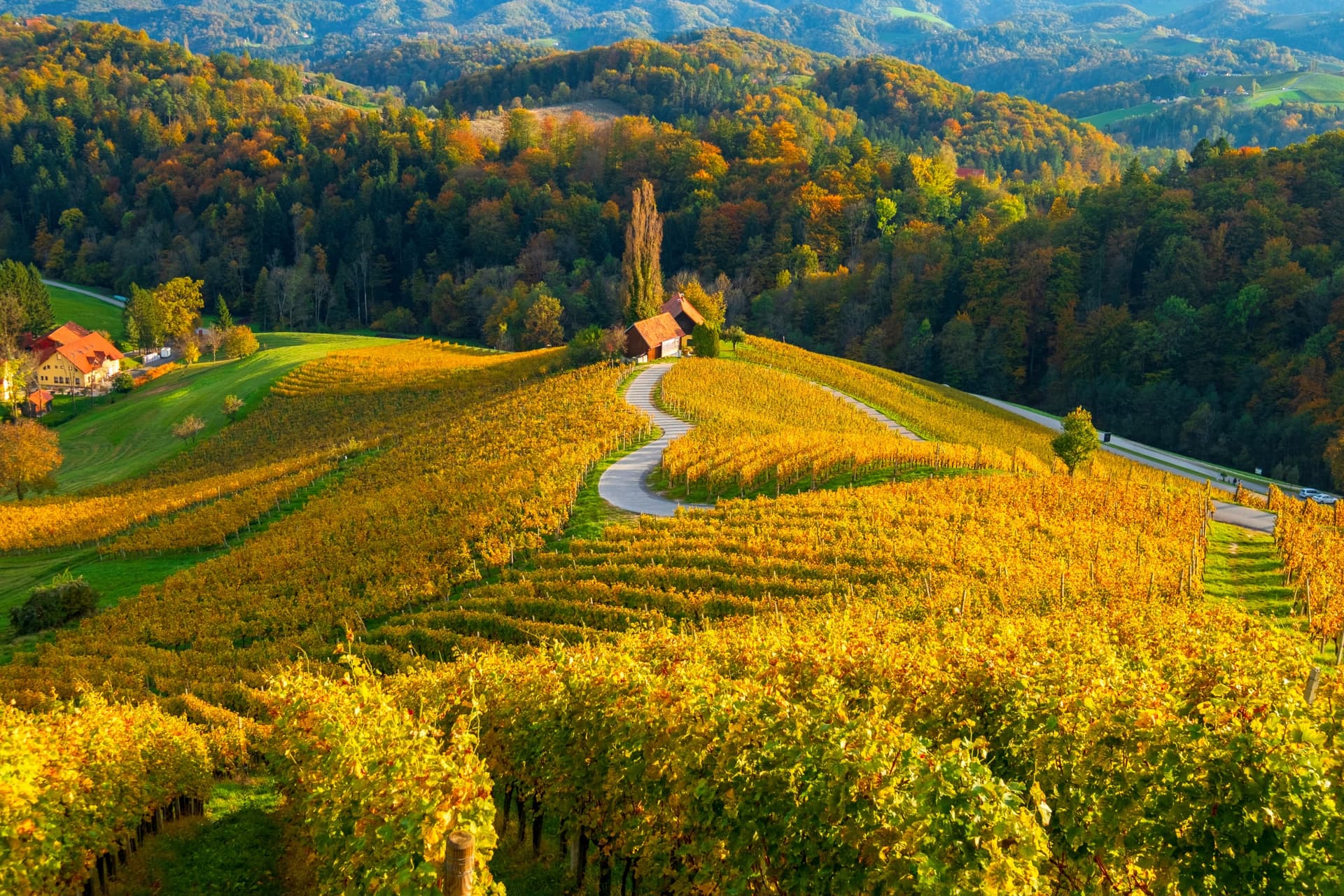
We recommend exploring by bike in autumn, when the vines are laden with grapes. A perfect time to enjoy the sublime colors of the landscapes while watching winemakers at work during the early harvest.
Sleep in the heart of Slovenian vineyards
Sleeping in the vineyards is a magical experience to enjoy during a trip to Slovénie. Imagine waking up in the heart of the vines in an enchanting landscape where nature's silence reigns...
To do so, you can opt for accommodations in a winemaker's cottage. Also called zidanicas, these small vine cottages were once used by winemakers as storage places before being converted into unique lodgings. While you'll find them in other wine regions of the country, the Dolenjska region has the most vine cottages to stay in in Slovénie.
Sleep in a wine barrel:
Here's another unusual accommodation option that should appeal to wine lovers and those seeking quirky experiences. At Glamping Vinska vas, for example, it's possible to sleep in one of Europe's largest wooden barrels. You'll even find a barrel housing a sauna!
Attend a wine celebration or festival

Slovénie celebrates its wine heritage through numerous events and festivals. An opportunity to taste Slovenian wines while immersing yourself in local culture.
Among the wine celebrations not to be missed during a stay in Slovénie, we can mention:
The harvest: the grape harvest is always accompanied by interesting entertainment programs. Don't miss the Old Vine harvest in Maribor, the urban harvest in Ptuj or the Lendava harvest.
Martinovanje (Saint Martin): it's one of the most important public holidays in Slovénie. Celebrating the arrival of the new vintage, it takes place every year on November 11 and extends over several days. Visit restaurants, inns and wine shops to experience this authentic celebration.
Festivals: many festivals take place throughout the country to celebrate Slovenian wine. Notable examples include the Old Vine Festival, the Ljubljana Slovenian Wine Festival (Ljubjanska vinska pot), the International Orange Wine Festival and many more...
Frequently asked questions
Slovénie has 3 major wine regions: Primorska (in the west, Mediterranean climate, renowned for its red wines and orange wine), Podravje (in the north, continental climate, known for its white wines and the world's oldest vine in Maribor) and Posavje (in the center-east, appreciated for its light and slightly tart wines such as Cviček).
Orange wine is a specialty of the Goriška Brda region in Primorska. It is obtained by fermenting whole white grapes (with skins and seeds) in amphorae, then macerated for 6 to 8 months. Its characteristic orange color comes from polyphenols contained in the grape skin.
The world's oldest vine is located in Maribor, Slovénie, in the Podravje wine region. Planted in the late Middle Ages, this vine over 450 years old (Žametovka or modra kavčina variety) still produces up to 55 kilograms of red grapes per year. It is listed in the Guinness Book of Records and you can visit the Old Vine House museum on site.
Autumn is ideal for visiting Slovenian vineyards: the vines are laden with grapes, the landscapes display sublime colors, and you can witness the harvest. On November 11, the Saint Martin festival (Martinovanje) celebrates the arrival of the new vintage throughout the country, an authentic experience not to be missed.
A zidanica (plural: zidanice) is a small traditional Slovenian winemaker's cottage. Once used to store vineyard equipment, many have been converted into unique lodgings allowing you to sleep in the heart of the vineyards. You'll find them in several wine regions, but the Dolenjska region, in Posavje, has the largest number.
Slovénie boasts many indigenous varieties to discover: Rebula and Malvazija in Primorska, Šipon (Podravje specialty), Zelen and Vitovska Grganja in the Vipava Valley, and Cviček, a typical Posavje rosé blend. For reds, Teran, Refošk and Blaufränkisch are must-tries.