Škocjan Caves
Škocjan Caves
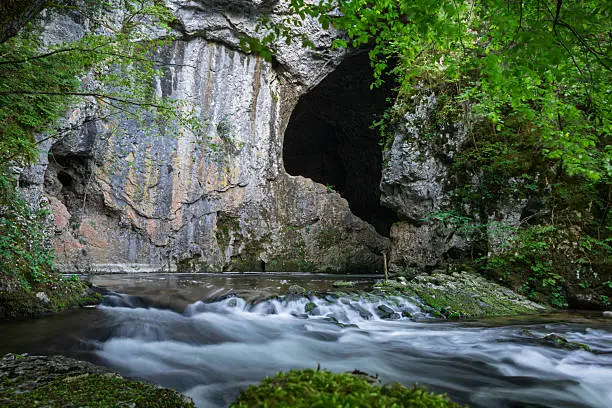
A UNESCO site in the Slovenian Karst, Škocjan Caves shelter a 3.5 km underground canyon carved by the Reka River, with monumental chambers and a bridge spanning 47 m.
Škocjan Caves, underground canyon of the Slovenian Karst
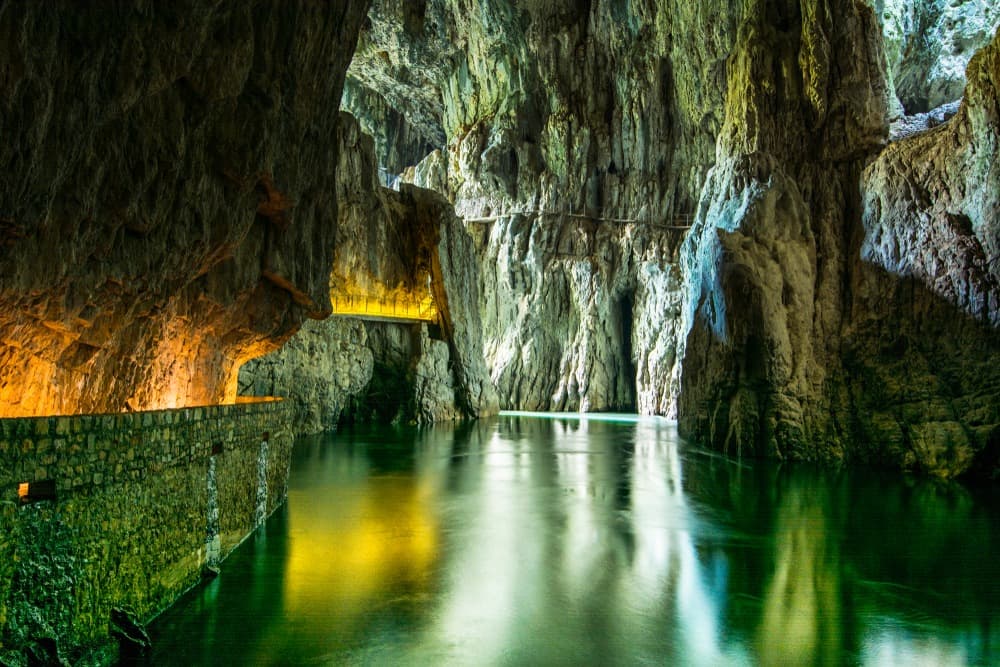
The Škocjan Caves (Škocjanske jame) form a karst system carved by the Reka River in southwest Slovénie. Inscribed on the UNESCO World Heritage list since 1986, designated a Ramsar site since 1999, and integrated into the Karst Biosphere Reserve (UNESCO's MAB programme) since 2004, they stand out for the sheer volume of their underground canyon: 3.5 km long, 10 to 60 m wide, and up to 150 m high.
The site welcomes approximately 90,000 visitors per year and remains a benchmark location for karst research worldwide.
Why visit Škocjan Caves
- An exceptional underground canyon: Martel Hall exceeds 2 million m³, making it one of Europe's largest known underground cavities.
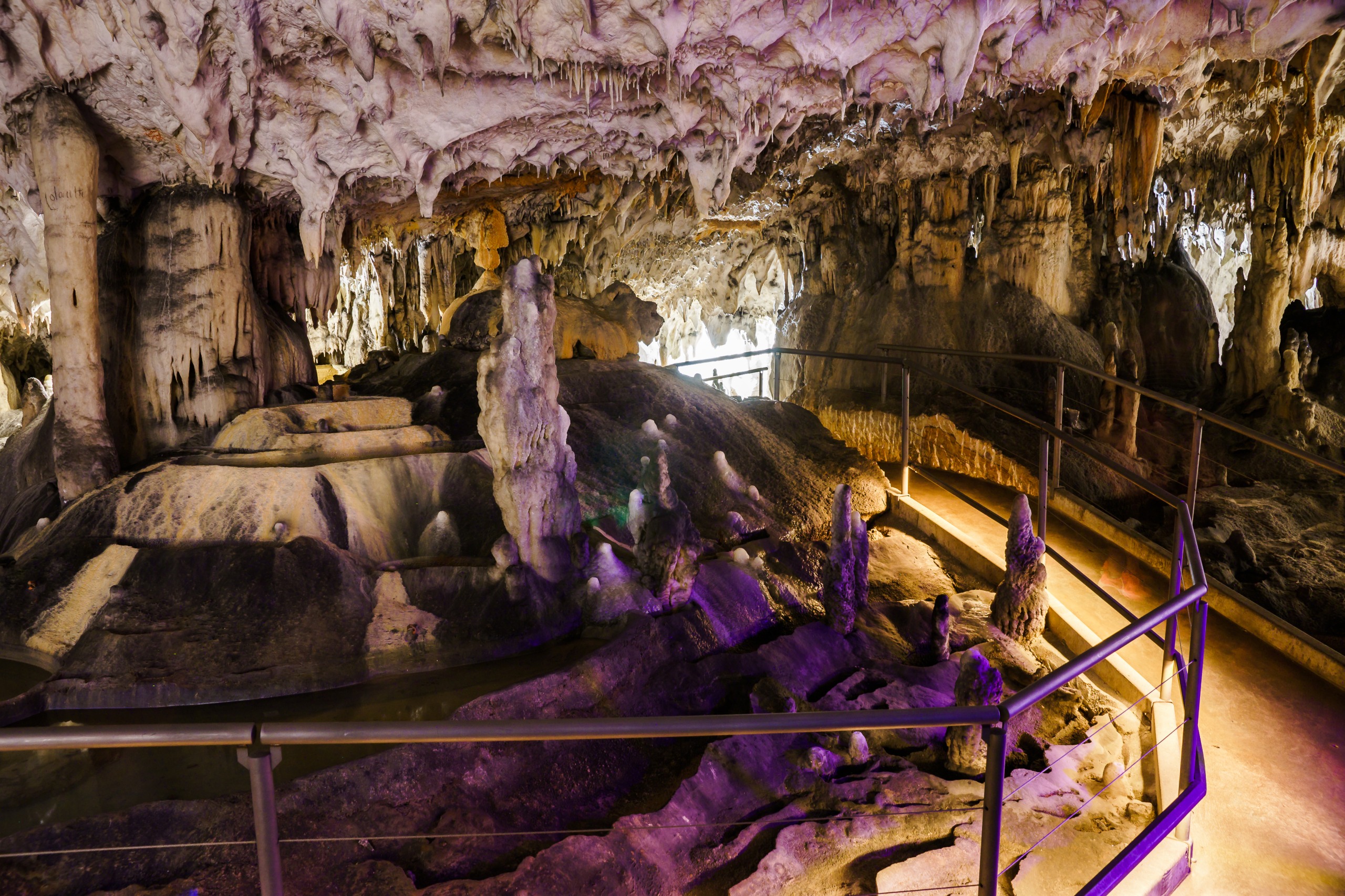
- Diverse rock formations: stalactites, stalagmites, flowstone, gours, and organ-pipe concretions, all visible along the same route.
- A protected natural setting: three international designations (UNESCO, Ramsar, MAB) and a regional park encompassing traditional villages, sinkholes, and an educational trail.
- Living heritage: three inhabited villages (Škocjan, Betanja, Matavun) and several museum collections accessible to visitors.
History and international recognition
Škocjan Caves have been frequented since prehistoric times, as evidenced by archaeological remains found in nearby shelters. Systematic speleological exploration dates to the 19th century, when the underground network was mapped and gradually opened to the public.
The site was inscribed on the UNESCO World Heritage list in 1986 for the exceptional scale of its underground canyon and its scientific importance in karst research. It subsequently became a Ramsar site on 21 May 1999 for its underground wetlands, then a Karst Biosphere Reserve in 2004. The Cerkvenik Bridge, built in 2003 at 47 m above the Reka, completes the infrastructure enabling visitors to traverse the canyon.
What to see in Škocjan Caves
The underground canyon and its chambers
- Martel Hall: volume exceeding 2 million m³, the visit's crowning moment through sheer scale.
- The Paradise section: opening passage adorned with stalactites, stalagmites, and flowstone evoking calcite drifts.
- The Organ Hall: organ-pipe concretion formed by millennia of limestone-laden water flow.
- The Gours Hall: tiered calcite basins, typical of deposits linked to slow water circulation.
- The Silent Grotto: numerous drip formations in a part of the network away from the main current.
- The Great Hall: home to a stalagmite nicknamed "the Giant," standing 15 m tall.
Cerkvenik Bridge and Mahorčič Grotto
The Cerkvenik Bridge allows crossing the canyon 47 m above the Reka, offering a direct perspective on the underground river. The Mahorčič Grotto, located downstream, features natural windows and waterfalls formed by the Reka, visible on dedicated guided tours.
Villages and park collections
The regional park encompasses three villages: Škocjan, Betanja, and Matavun. Škocjan is home to the Church of St. Cantius and its cemetery, considered cultural monuments. Collections are distributed among the Jakopin Barn, the Jurij Barn, and the Delez Property in Škocjan, housing geological, biological, and archaeological materials. An educational trail connects the three villages and circles the Great and Small sinkholes.
Practical information
- Duration of visit: allow 2 to 3 hours for the main canyon route; half a day to a full day if you add Mahorčič Grotto and the village trail.
- Underground conditions: constant temperature around 12 °C year-round, high humidity. Bring a jacket and closed, non-slip footwear.
- Accessibility: the route includes numerous steps and narrow passages; it is not suitable for people with reduced mobility or strollers.
- Rates and hours: guided tours only, departing at regular intervals. Rates and time slots vary by season; check current information before your visit.
When to visit
The caves are open year-round, with more frequent departures during high season (June to September). Spring and autumn offer a good balance: moderate crowds and Reka levels often high enough to make the underground river more impressive. In winter, the temperature contrast between the exterior and the cavern (12 °C) is marked, and some secondary routes may close in case of flooding.
How to get there
- From Ljubljana: approximately 1 to 1 hour 15 minutes by motorway A1 toward Koper, Divača exit, then a few kilometres to the Matavun reception centre.
- From Trieste (Italy): approximately 30 to 45 minutes by road via the Fernetti border crossing.
- By train: Divača station is served from Ljubljana; allow approximately 30 to 45 minutes' walk to the park entrance, or a short taxi ride.
Nearby attractions
The caves are located approximately 30 km southwest of Rakov Škocjan Park, another remarkable karst site. In the wider region, several sites complement an itinerary through Slovénie: Bled Island to the northwest, the Kobarid Museum in the Soča Valley, the Javorca memorial, and Miramare Castle near Trieste.
Frequently asked questions
The guided canyon tour lasts between 2 and 3 hours. Adding Mahorčič Grotto and the educational village trail, plan for half a day to a full day on site.
The underground route includes numerous steps, narrow passages, and elevation changes. It is not suitable for strollers or people with reduced mobility. Children able to walk can participate, with supervision.
Temperature remains around 12 °C year-round with high humidity. Bring a jacket, long-sleeved clothing, and closed, non-slip shoes.
Photography is generally regulated inside the underground canyon to preserve the site and other visitors' comfort. Check with the reception centre before your visit.
Postojna is visited partly by small train and emphasises the richness of its concretions. Škocjan, a UNESCO site, stands out for its monumental underground canyon and the Reka River, which visitors cross on foot via the Cerkvenik Bridge.
Including Škocjan Caves in your journey
Škocjan Caves integrate naturally into an itinerary combining the Slovenian Karst, the Adriatic coast, and the Julian Alps. To build a bespoke trip including this UNESCO site, explore our Slovénie travel suggestions.
Interested in this visit?
We can include it in your personalised itinerary.