Škofja Loka
Škofja Loka
Škofja Loka preserves one of Slovenia's most intact medieval cores: a castle perched on rocky crags, a baroque square, medieval ramparts and a UNESCO-inscribed theatrical Passion play, 30 km from Ljubljana.
Škofja Loka is one of Slovenia's best-preserved medieval towns, nestled at the confluence of the Selška Sora and Poljanska Sora rivers, roughly thirty kilometres north-west of Ljubljana. Its historic centre, dominated by a castle rising from a rocky escarpment, has survived the centuries nearly intact. The town owes its name to the Prince-Bishops of Freising (Škof = bishop, Loka = wetland meadow), who governed it for more than eight hundred years.
Essentials at a glance
- Access from Ljubljana: direct train from Ljubljana's main station, journey of roughly 40 minutes; regular buses also available.
- Recommended duration: half a day suffices for the historic centre; a full day to include the castle and surroundings.
- Castle entry: paid admission (regional museum inside).
- Dress code: no particular requirements for the town; comfortable shoes recommended for cobblestones and the climb to the castle.
What to see
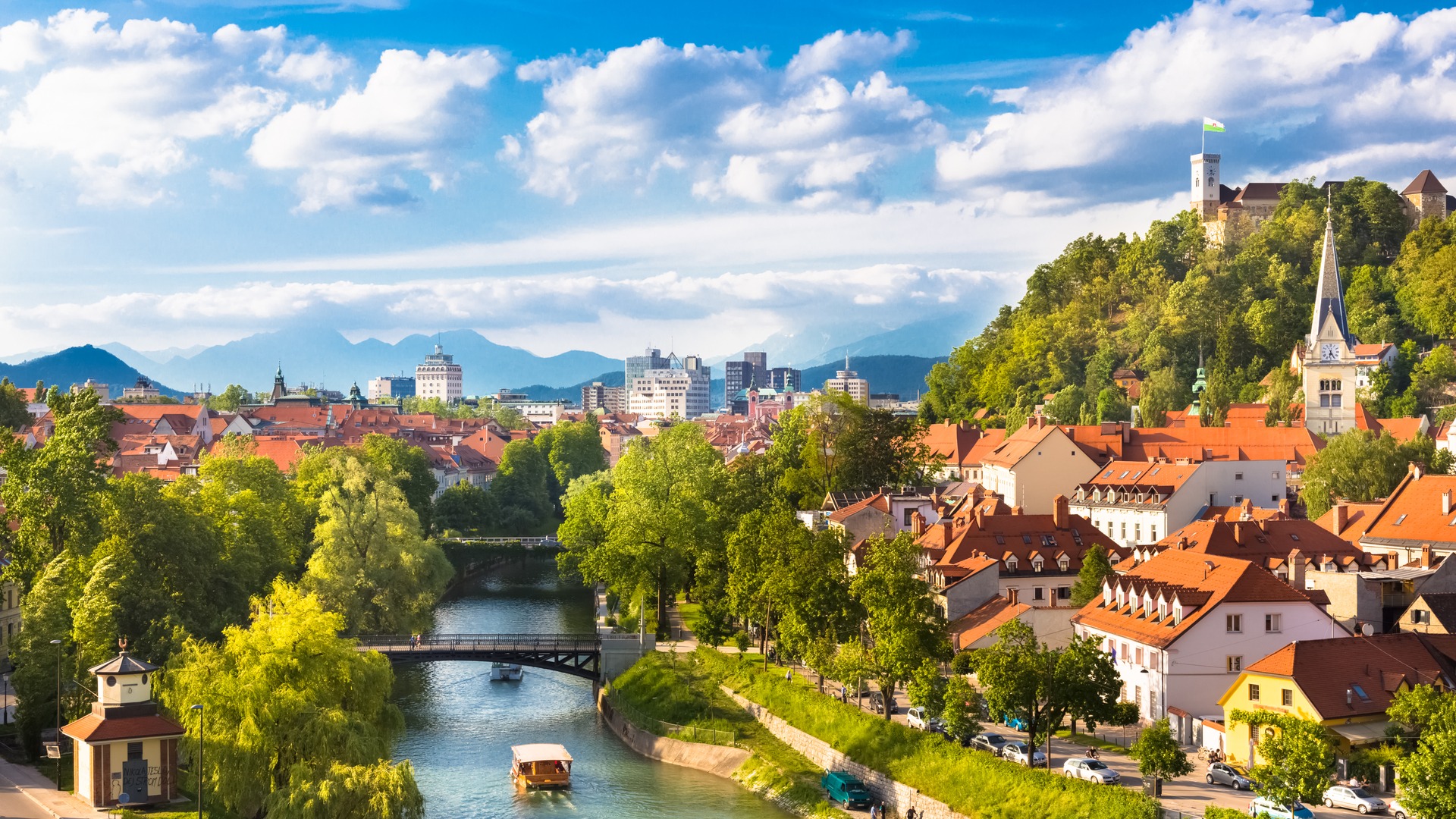
The heart of the town is Mestni trg square, ringed by baroque and Renaissance burgher houses with coloured facades. The Spodnja Loka tower and remnants of medieval ramparts still mark the old settlement's bounds. The parish church St. James (Cerkev sv. Jakoba) dominates the main square with its distinctive bell tower. Loka Castle (Loški grad), accessible on foot from the centre, houses the Škofja Loka regional museum, rich in collections of sacred art, local craftsmanship and regional history.
History and context
In 973, Emperor Otto II cedes the Loka domain to the Prince-Bishops of Freising (Bavaria)—one of the earliest documented mentions of a place in Slovenia. This episcopal rule lasted until 1803, affording the town rare stability and prosperity. An earthquake in 1511 destroyed parts of the buildings, but swift reconstruction gave the centre its present Renaissance-baroque character. During the Second World War, Škofja Loka was a hub of resistance; the town preserves several memorials from this period.
Highlights of your visit
Loka Castle and its museum
Built across the 12th–16th centuries, the castle commands a panoramic view over red-tiled roofs and the two river valleys. The regional museum displays Gothic sculptures, objects of medieval daily life and ethnographic collections on peasant life in the Škofja Loka region.
Mestni trg square
The living heart of the old town, the square is lined with houses from the 16th–18th centuries. The central fountain and arcades create an atmosphere of authentic medieval settlement, without artificial recreation.
The Passion of Škofja Loka
Every six years (next edition to be confirmed), the town re-enacts the Passion of Škofja Loka, an 18th-century religious mystery play inscribed in UNESCO's intangible cultural heritage. Hundreds of residents participate in this theatrical procession through medieval streets—a unique event in Central Europe.
The Stara Loka and Puštál quarters
Beyond the centre, the hamlet of Stara Loka preserves a Romanesque church and manor house. The Puštál quarter, across the river, offers a classic vantage point over the castle and old town roofs.
Photography tips
The finest view of the old town is captured from the right bank of the Sora, on the Puštál side, in late afternoon when golden light strikes the facades and castle. Mestni trg is most photogenic early in the morning, before visitor crowds arrive. From the castle ramparts, the panorama over the Škofja Loka Alps is particularly sharp in clear skies following rain.
Location and access
Škofja Loka lies roughly 25 km north-west of Ljubljana, in the Upper Carniola region. The railway station is a few minutes' walk from the historic centre. By car, the town is accessible via the A2 motorway (Škofja Loka exit). The medieval centre is largely pedestrian; wheelchair access to the cobbled streets remains limited, though the main square is accessible.
In the vicinity
- Ljubljana — Slovenia's capital, about thirty kilometres away, combines a medieval castle and an animated baroque centre.
- Lake Bled — roughly 30 km to the north, the alpine lake with its island and castle is one of Slovenia's most photographed sites.
- Kranj — medieval town about fifteen kilometres away, with its historic centre and the house of poet France Prešeren.
- Selška Sora Valley — follows the river upstream towards traditional villages and uncrowded alpine scenery.
Want to discover this destination?
Our local advisors design your tailor-made trip.