Postojna Cave
Postojna Cave
With nearly 24 km of galleries, Postojna Cave is one of Europe's largest karst systems. Underground train, giant formations and Proteus anguinus make it a major natural site in Slovénie.
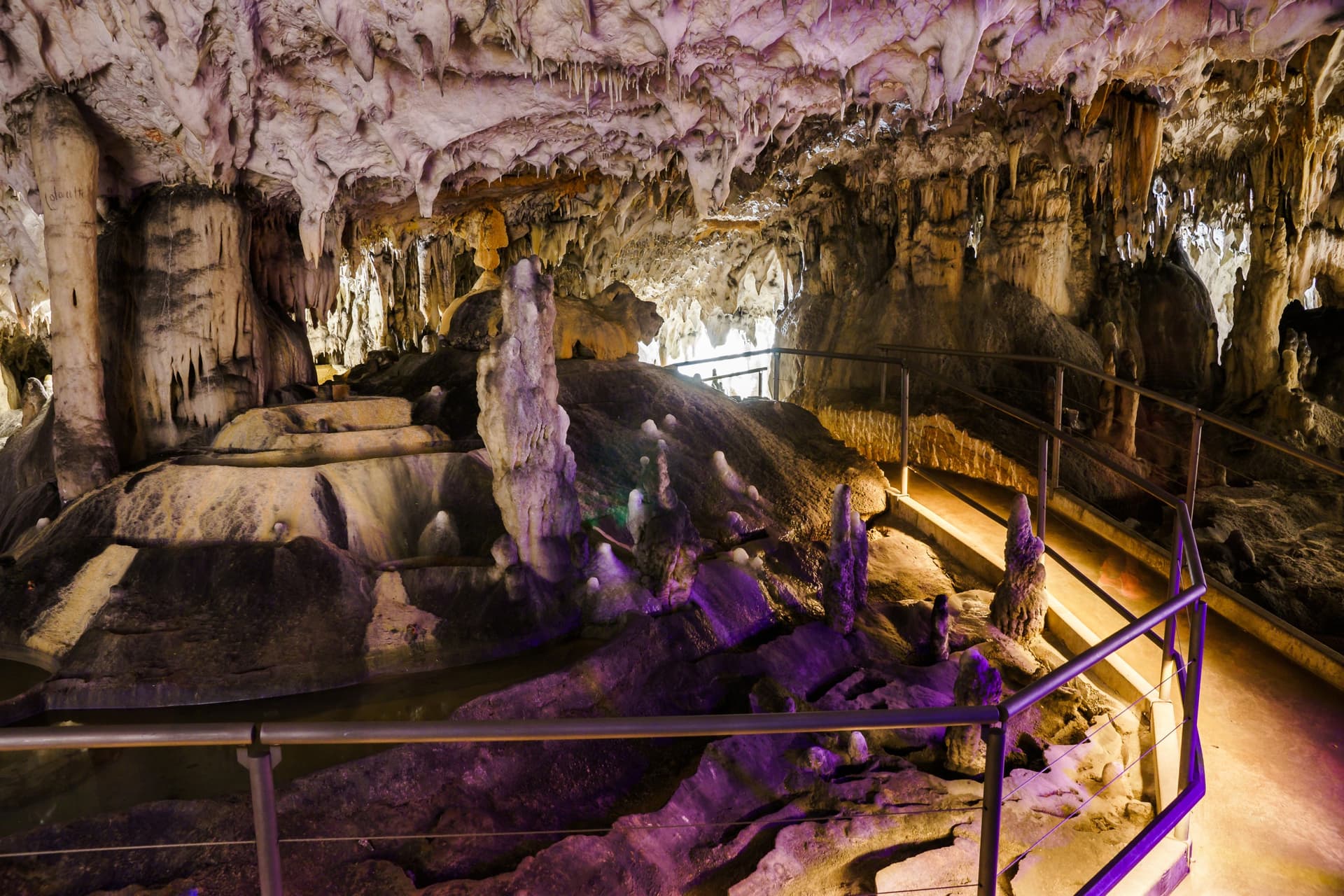
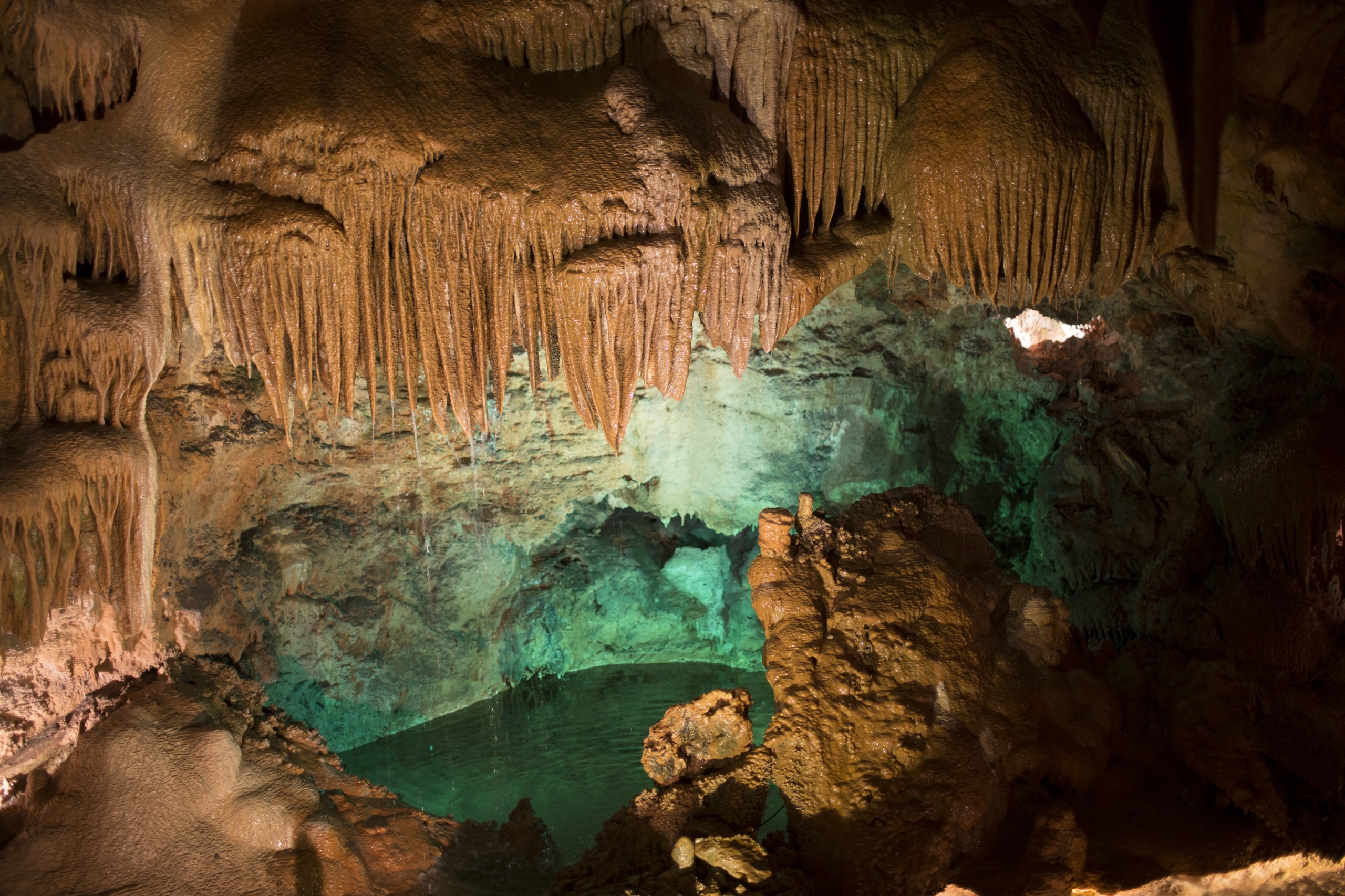
Carved by the Pivka River through the Slovénie karst, Postojna Cave is one of Europe's largest karst systems, featuring nearly 24 kilometers of explored galleries. Its stalactites, stalagmites and calcite columns form spectacular underground landscapes. The site is also home to Proteus anguinus, a cave-dwelling amphibian endemic to the western Balkans. The visit combines an underground train ride and a walking tour.
Practical information at a glance
- Admission: paid entry (adult tickets and reduced rates available on the official website)
- Duration: approximately 1.5 to 2 hours for a standard guided tour
- Clothing: a jacket or sweater is essential — the cave temperature remains constant at around 10°C year-round
- Footwear: non-slip soles recommended (wet floors)
- Access: the cave is located at the edge of Postojna town, accessible by car or bus from Ljubljana (approximately 1 hour)
- Accessibility: the underground train is accessible; part of the walking route is as well — inquire at the ticket office
- Guided tours: mandatory, included with admission, available in multiple languages including English-speaking guides
What to see
The electric train ride covers several kilometers of galleries before depositing visitors at the heart of the network. The walking tour then passes through the Great Mountain, a chamber of giant formations, and the Belvedere, the highest point of the visit. The Concert Hall, with its remarkable acoustics, hosts musical events. In the underground aquarium, the Proteus anguinus — nicknamed the "human fish" — can be observed in captivity.
History and context
The cave has been known to local inhabitants since the Middle Ages. Scientific exploration began in 1818 when Luka Čeč, an employee of the salt works, discovered the inner galleries. By 1872, a human-powered train was transporting visitors; it was electrified in the early twentieth century. During World War II, occupying forces used part of the galleries as a fuel depot; a fire in 1944 destroyed a section of the formations, some of which are slowly reconstituting.
The highlights of your visit
The underground train
The electric train ride through the initial galleries immediately conveys the scale of the network. Walls pass just centimeters away, revealing continuous limestone formations over several kilometers.
The Great Mountain and the Belvedere
This central chamber concentrates the largest columns and stalagmites in the network. The viewpoint from the Belvedere allows you to take in the entire chamber, which rises several tens of meters high.
The Concert Hall
With capacity for several hundred people, this chamber has hosted concerts and events since the nineteenth century. Its natural acoustics are exceptional for an underground space.
Proteus anguinus
This blind, unpigmented amphibian lives exclusively in the underground waters of the Dinaric karst. The cave's aquarium allows you to observe it without disturbing wild populations.
Photography tips
- Photography without flash is permitted; a lightweight tripod greatly improves results in low light.
- Set a high ISO sensitivity and wide aperture to capture the scenic lighting installed throughout the galleries.
- The Concert Hall and Great Mountain offer the widest compositions.
- Avoid using flash at the Proteus aquarium: it disturbs the animal and creates reflections on the glass.
Location and access
The cave is located at the entrance to the town of Postojna, in the inner karst region, approximately 50 km southwest of Ljubljana. The national highway E61/A1 connects the two cities directly. Regular buses depart from Ljubljana's main bus station. Postojna railway station is a few kilometers from the cave entrance; a taxi or local bus completes the journey. Car parking is available on site.
Nearby attractions
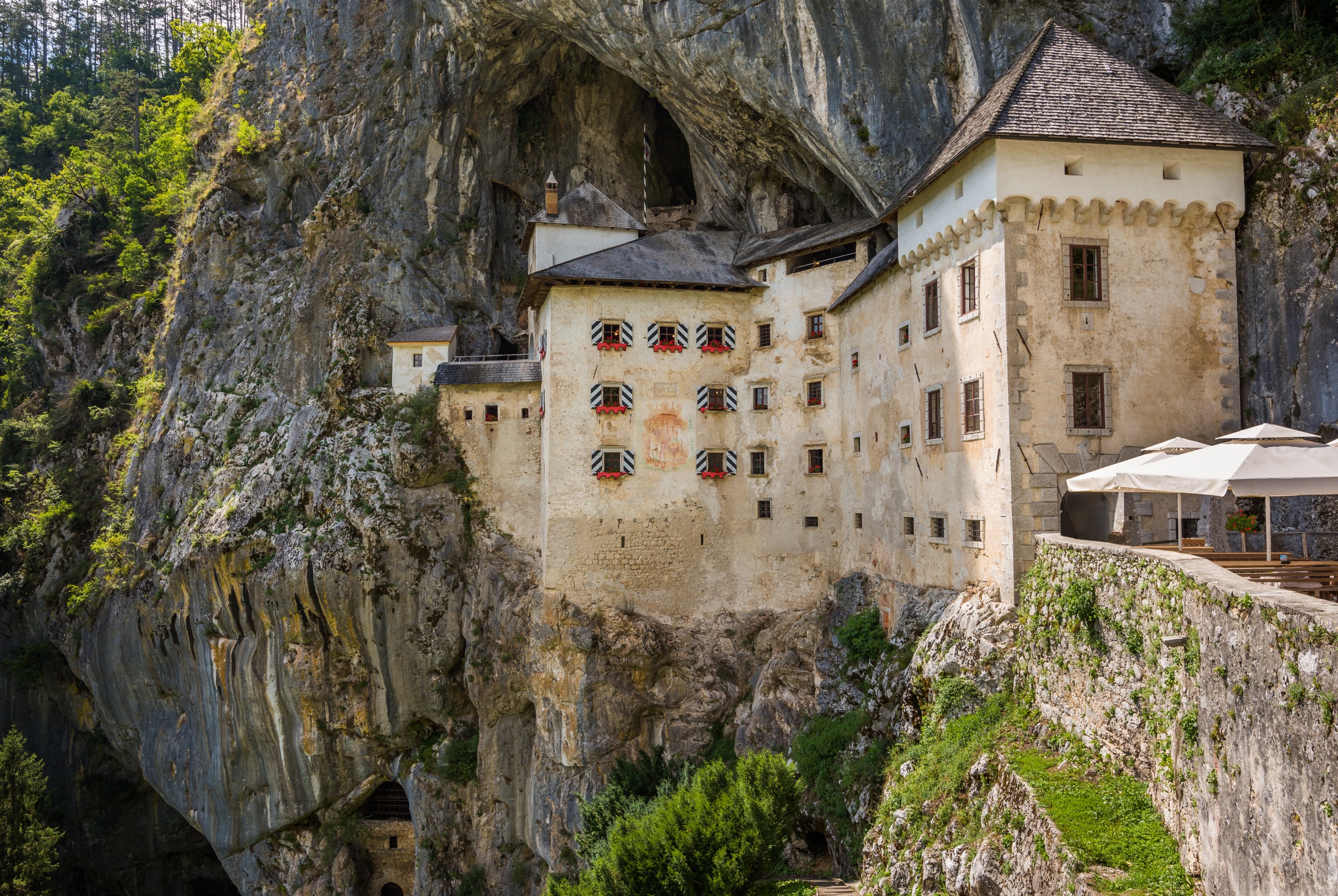
- Predjama Castle — medieval fortress built into a cliff face, about ten kilometers from the cave; the two sites combine easily in a single day.
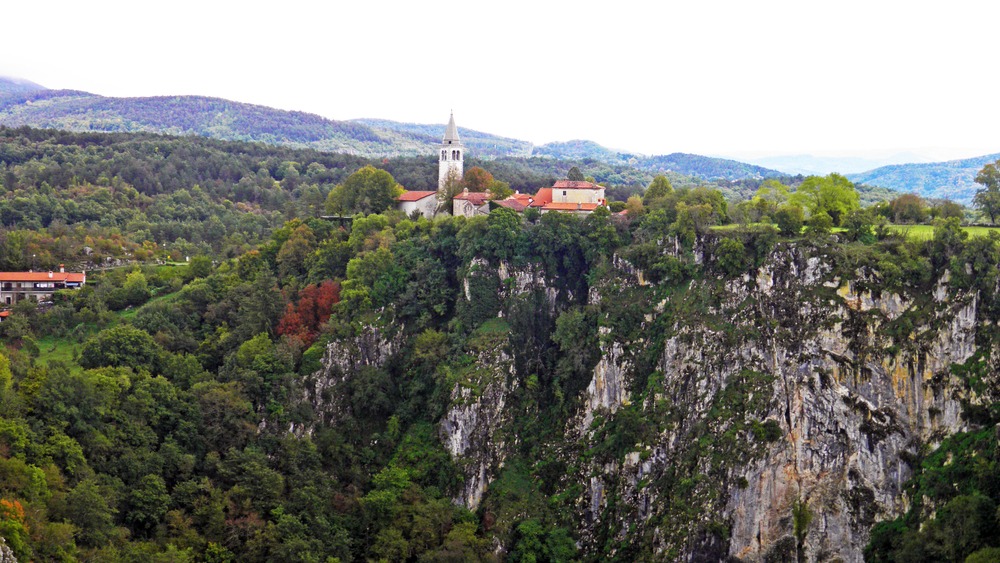
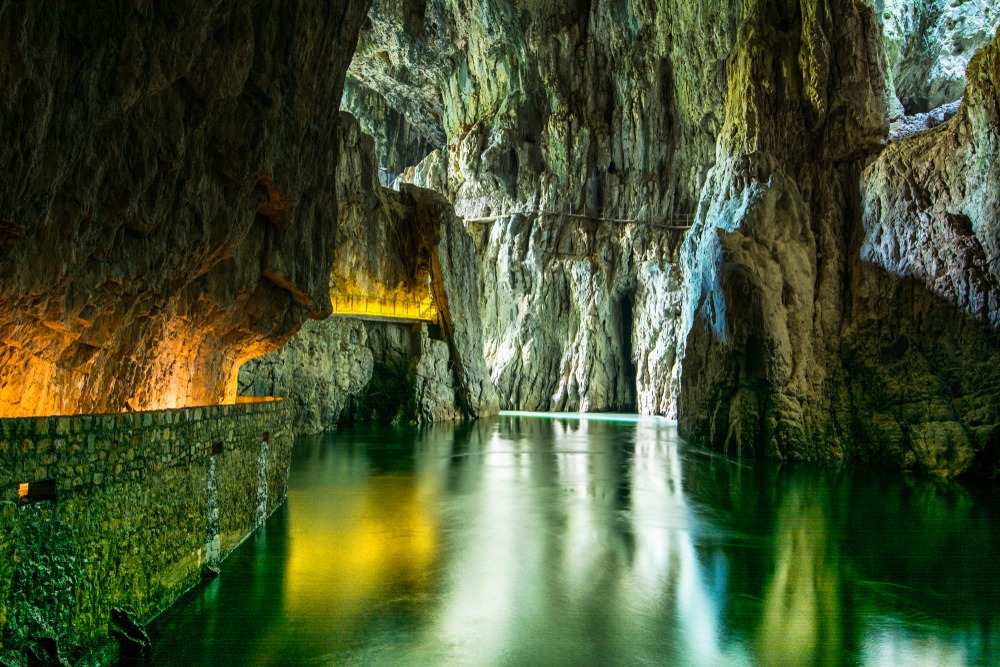
- Škocjan Caves — UNESCO World Heritage site, approximately 30 km away, featuring one of the world's largest underground canyons.
- Lake Cerknica — Europe's unique intermittent lake, about twenty kilometers to the northeast, interesting for birdwatching.
- Lipica Stud Farm — birthplace of the Lipizzan horse, approximately 40 km toward the Adriatic coast.
Photos
Nearby
Interested in this visit?
We can include it in your personalised itinerary.