Kobarid Museum
Kobarid Museum
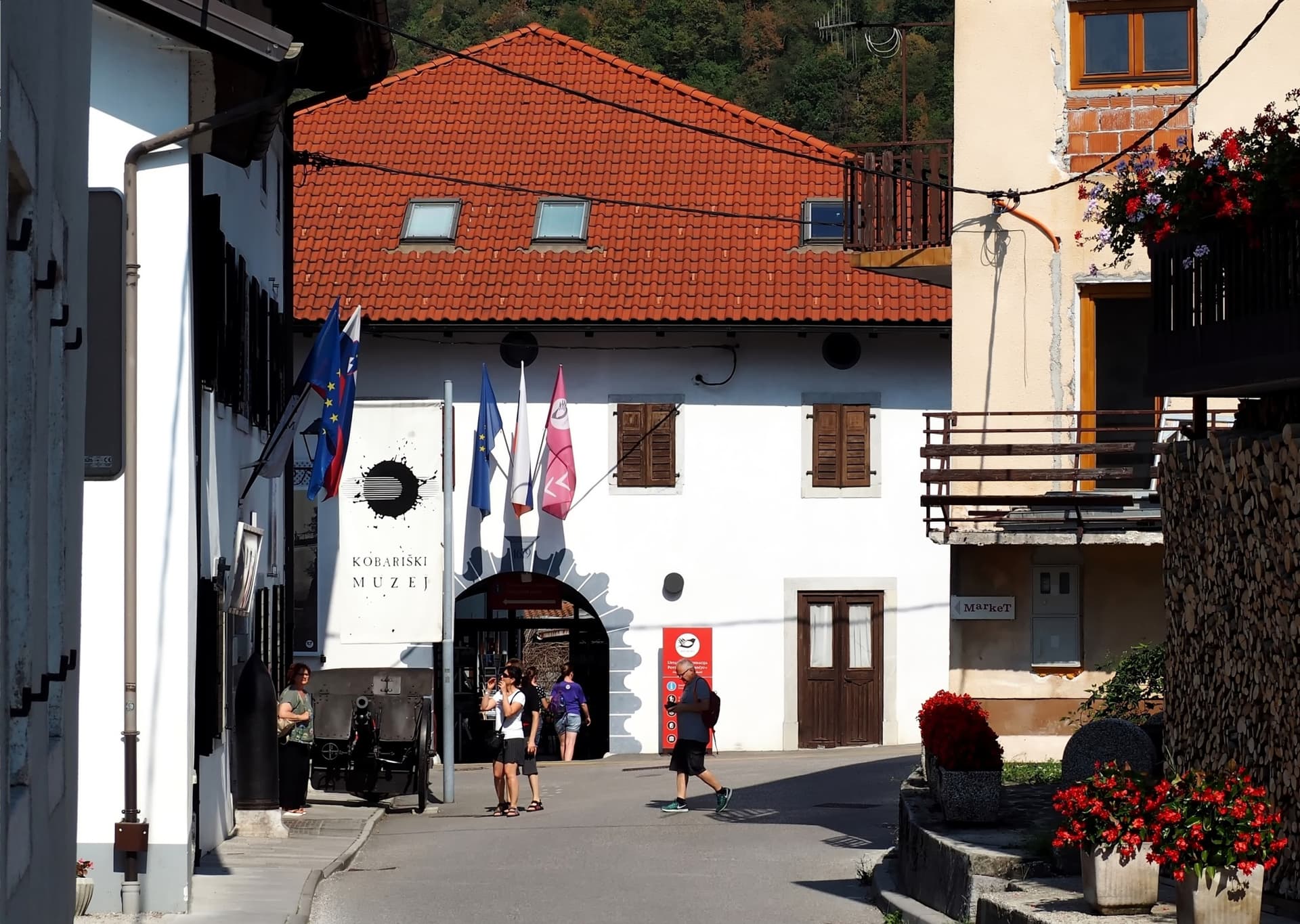
Opened in 1990, Kobarid Museum documents the twelve battles of the Isonzo and the mountain warfare conducted in the Soča Valley between 1915 and 1917.
Opened in 1990 in the town of Kobarid, Kobarid Museum documents the twelve battles of the Isonzo, one of the deadliest clashes of the First World War. Recognised as "the centre for representing the Isonzo Front heritage at Slovenian, European and global scale", it stands as a key destination for understanding the mountain warfare conducted between 1915 and 1917 in the Soča Valley.
Why visit Kobarid Museum
The museum concentrates, across two floors, all the documents, photographs and objects necessary to understand the Isonzo Front. It received the European Council Museum Prize in 1993, awarded in Strasbourg—a distinction that remains rare for an institution located in a remote Alpine valley.
Three reasons make the visit worthwhile:
- Clear thematic museography that privileges the daily lives of soldiers over pure military chronology.
- A 20-minute video available in 10 languages, which traces 29 months of fighting and allows you to grasp the sequence of operations before exploring the rooms.
- Direct location on the theatre of combat: the Soča Valley and its peaks are visible from the museum exit.
The Isonzo Front: historical landmarks
Between 23 June 1915 and 12 September 1917, twelve successive battles pitted Italy against Austria-Hungary along the Soča river (Isonzo in Italian). The stake: to enable Italy to seize the Austro-Hungarian port of Trieste, two-thirds of whose inhabitants were Italian.
The Italian armies, more numerous, foundered on the steep mountains held by Austro-Hungarian forces better equipped. The human toll is considerable: approximately 300,000 Italian soldiers and 200,000 Austro-Hungarian soldiers killed, to which must be added 500,000 Italian wounded and 400,000 Austro-Hungarian wounded.
The twelve battles
- 1st battle (23 June – 7 July 1915)
- 2nd battle (17 July – 3 August 1915)
- 3rd battle (18 October – 4 November 1915)
- 4th battle (10 November – 2 December 1915)
- 5th battle (9 – 15 March 1916)
- 6th battle (6 – 17 August 1916)
- 7th battle (14 – 17 September 1916)
- 8th battle (10 – 12 October 1916)
- 9th battle (1st – 4 November 1916)
- 10th battle (12 May – 8 June 1917)
- 11th battle (18 August – 15 September 1917)
- 12th battle, known as the Battle of Caporetto (24 October – 10 November 1917), won by Germano-Austrian forces.
International recognition
Since its opening on 20 October 1990, the museum has received several landmark official visits:
- November 1993: Miguel Angel Martínez, President of the Parliamentary Assembly of the Council of Europe.
- 3 August 1994: Václav Havel (Czechia), Árpád Göncz (Hungary) and Milan Kučan (Slovenia).
- May 1995: Jožef Školč and Heinz Fischer.
- July 1995: senior dignitaries of the Russian Orthodox Church.
What to see in the museum
The visit follows a thematic route organised by rooms, each shedding light on one dimension of the conflict.
Mount Krn Massif Room
It is devoted to the first Italian assault along the Soča in May 1915, which marks Italy's entry into the war. Historic military maps, logbooks and large panels describe the front lines and positions in the upper valley.
White Room
It evokes warfare in snow-covered mountains, at altitudes above 2,000 metres: avalanches, frost, supply by makeshift cable cars.
Black Room
It brings together the museum's most harrowing photographs—soldiers dead or dying, shattered trenches—treated with restraint.
Rear Room
It documents daily life far from the front lines: military hospitals, correspondence, supplies, camps. The contrast with the black room is intentional.
Battle of Caporetto Room
The twelfth battle, launched by Germano-Austrian forces in October 1917, occupies the final room. It resulted in Italian rout and withdrawal to the Piave, an episode that remained in Italian memory as "Caporetto".
Practical information
- Duration of visit: allow 1.5 to 2.5 hours depending on your interest in military details. Allow more if you watch the video in full.
- Opening hours: open year-round, with wider opening times in summer (July-August) and more limited hours in winter. Check current opening hours on the official website before your visit.
- Admission: moderate prices, with reductions for students, families and groups.
- Languages: panels and audio guides available in several languages, including French for the main video.
- Accessibility: historic building across several levels, partial accessibility for people with reduced mobility.
How to get to Kobarid
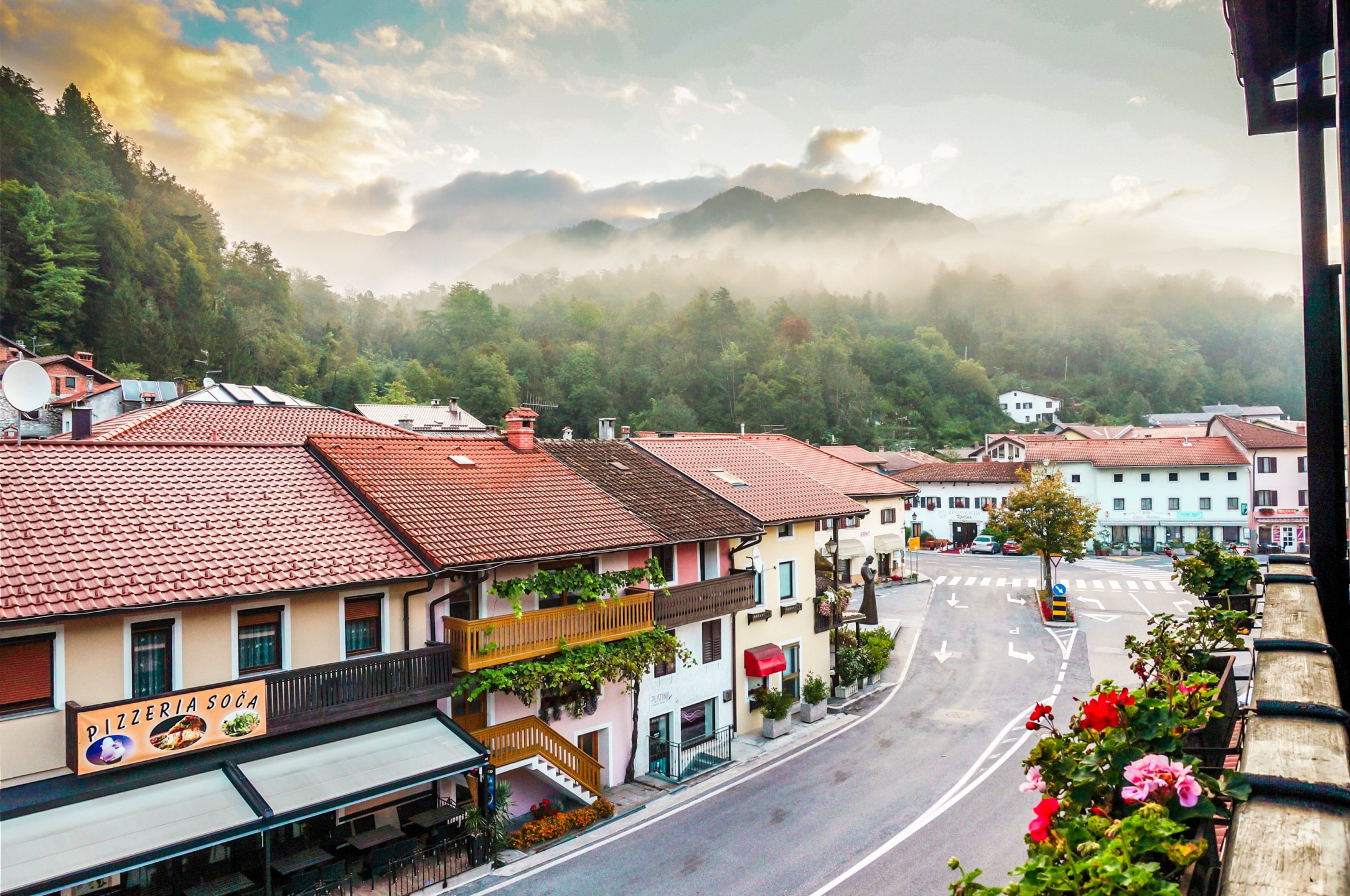
Kobarid is located in north-western Slovenia, in the Soča Valley, approximately 115 km from Ljubljana and 130 km from Trieste.
- By car: the most practical option. From Ljubljana, allow approximately 2 hours via Idrija or Tolmin. From Italy, Predil Pass or the road from Cividale del Friuli are passable from April to October.
- By bus: regular connections from Ljubljana and Nova Gorica, more frequent in season.
- Nearest airports: Ljubljana (Slovenia) and Trieste (Italy).
To see nearby
The museum naturally lends itself to a broader day trip around the memory of the Isonzo Front and Alpine landscapes.
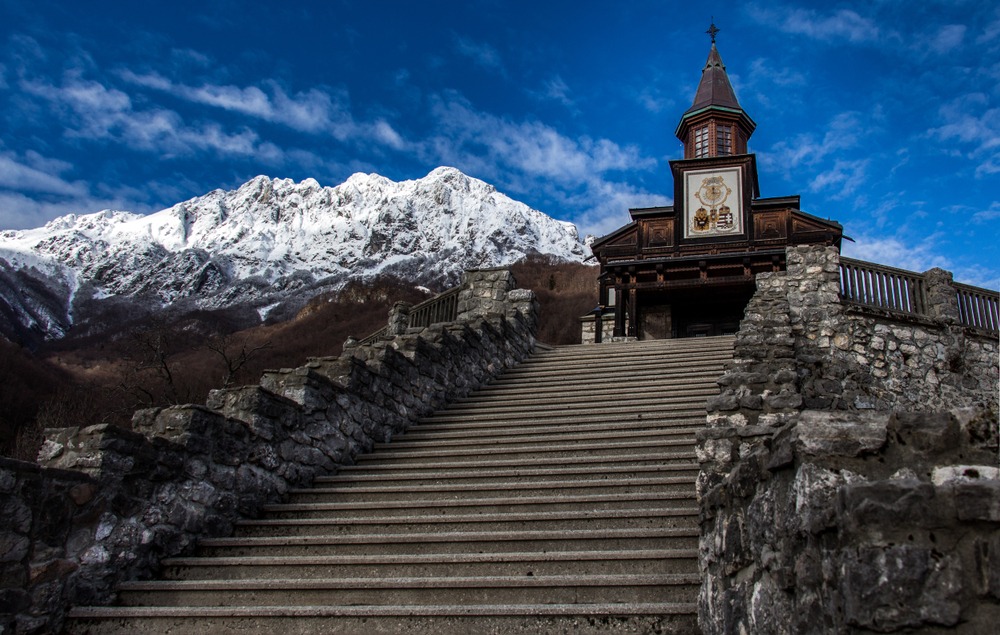
- The Church of the Holy Spirit at Javorca, a wooden memorial erected in 1916 by Austro-Hungarian soldiers in memory of their comrades who fell on Mount Krn.
- The Kobarid Historical Trail (Kobariška zgodovinska pot), a marked loop of approximately 5 km that passes through trenches, an Italian ossuary and Kozjak waterfall.
- Miramare Castle near Trieste, a Habsburg residence, extends the visit on the Italian side.
- Piazza Unità d'Italia in Trieste, the objective city of Italian armies during the war.
Frequently asked questions
Frequently asked questions
Planning the rest of your journey
Kobarid Museum fits into a broader itinerary through the Soča Valley and Julian Alps. To build a coherent stay around the memory of the Great War and Alpine landscapes, consult our suggestions for travel in Slovenia.
Interested in this visit?
We can include it in your personalised itinerary.