The Triple Bridge or Tromostovje
The Triple Bridge or Tromostovje
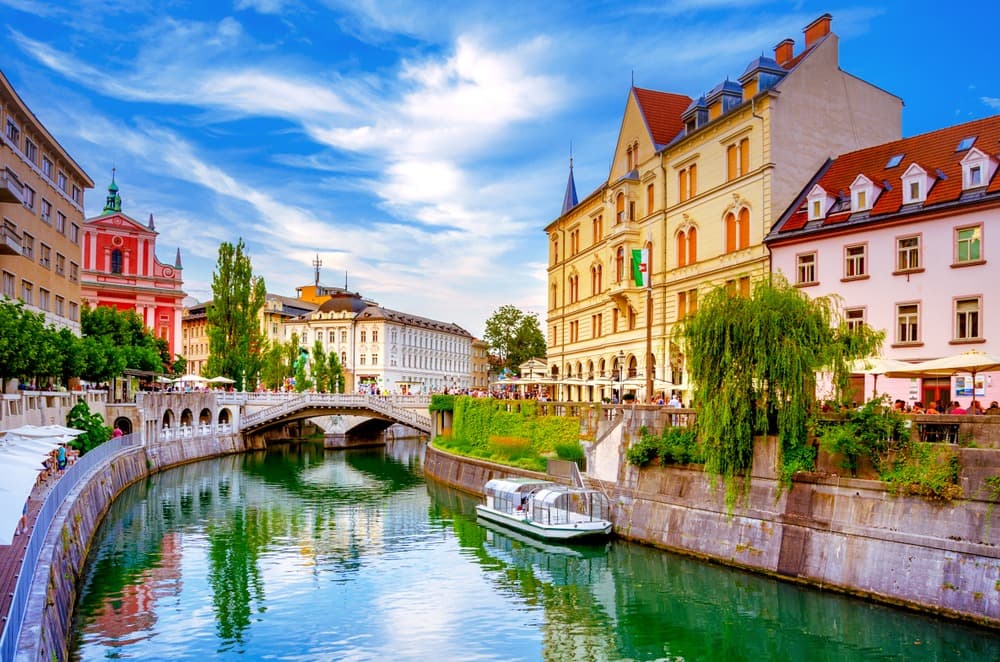
The Triple Bridge of Ljubljana, or Tromostovje, unites three parallel bridges designed by Plečnik above the Ljubljanica, connecting the old town to the modern center.
The Triple Bridge, or Tromostovje in Slovenian, spans the Ljubljanica river in the heart of Ljubljana. This singular ensemble of three adjoining bridges connects the medieval old town to the modern city, and constitutes one of the most frequently crossed passages between Prešernov trg and Mestni trg. Its distinctiveness lies in the combination of a central stone bridge, dating from the nineteenth century, with two pedestrian walkways added in the 1930s by Slovenian architect Jože Plečnik.
Why visit the Triple Bridge
The Triple Bridge is a central landmark of Ljubljana, both a pedestrian crossroads and an architectural work. Three main reasons make a visit worthwhile:
- A rare architectural signature: few cities possess a system of three parallel bridges forming a single ensemble.
- A witness to the city's urban history, from the Middle Ages to Plečnik's modernist interventions.
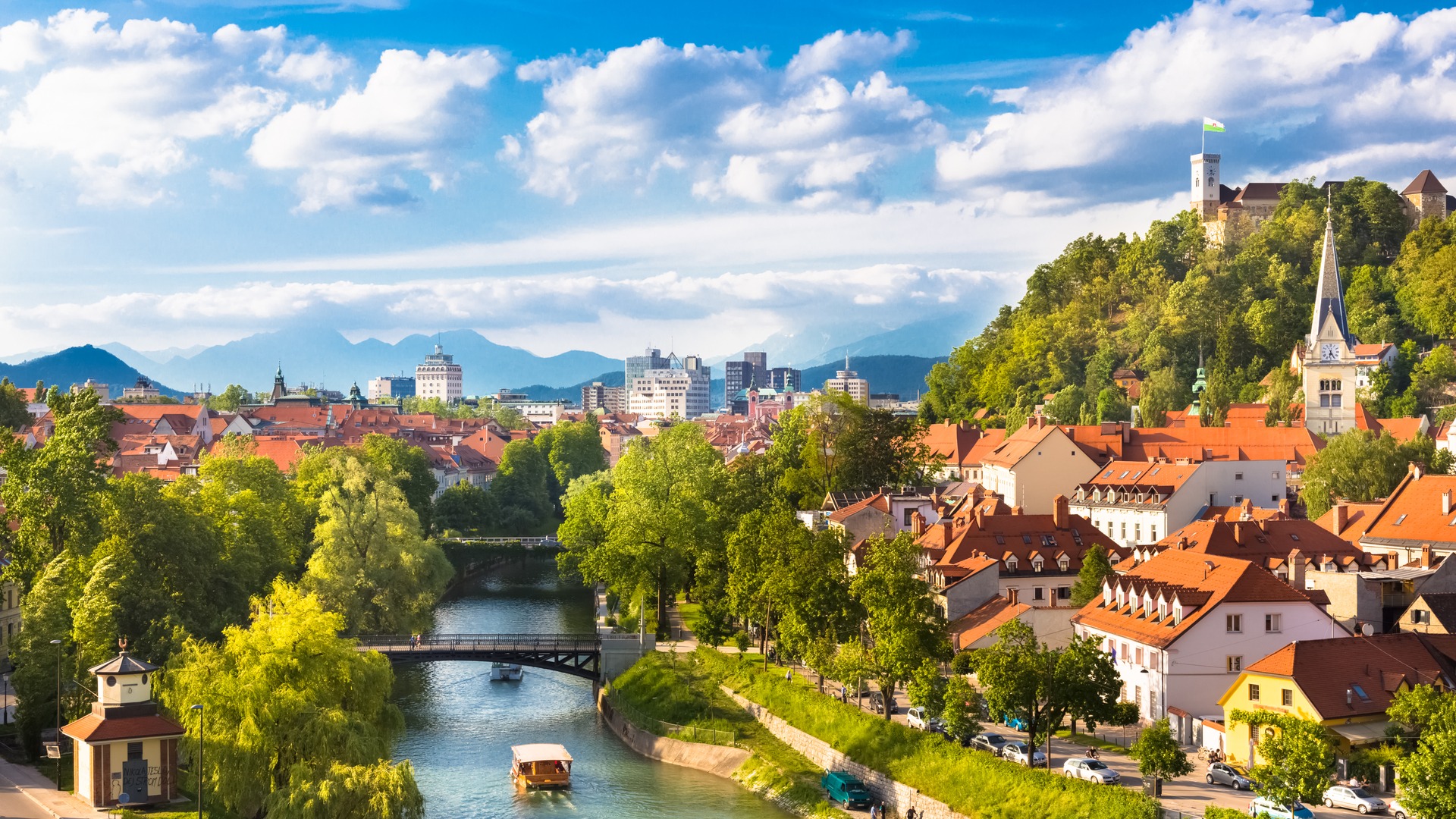
- A privileged vantage point over the Ljubljanica, the baroque facades of the old town, and the castle perched in the background.
Access is free, and the site has been integrated into the city's pedestrian zone since 2007, making it a natural stop on any tour of the historic center.
History of the Tromostovje
The first written mention of a bridge at this location dates back to 1280, under the name Stari most (the old bridge). In the early fourteenth century, the structure is also referred to as the Bridge of Shoemakers and Špitalski most (Špital bridge), reflecting neighboring activities and institutions. Destroyed by fire, it was rebuilt in 1657.
In 1842, architect Giovanni Picco, originally from Villach (in Carinthia, then part of the Austrian Empire), replaced the lower bridge with a new structure featuring two arches and a metal railing. Named Frančev most (Franz Bridge) in honor of Archduke Franz Karl, it was inaugurated on September 25, 1842.
The decisive turning point came between 1929 and 1932, when Jože Plečnik, a major figure in Slovenian architecture, added two lateral pedestrian walkways to the central stone bridge. His objective was twofold: to prevent congestion at the crossing and to create a cohesive urban composition between Prešernov trg, the central square, and Mestni trg, the municipal square. Plečnik designed the central bridge in an arched form, while the two lateral walkways adopted a funnel-shaped path, visually widening the public space. Two staircases descend from the lateral bridges to the lower terrace arranged along the riverbank.
The Triple Bridge was renovated in 1992, then integrated into Ljubljana's pedestrian zone in 2007.
What to see on site
Plečnik's architecture
The lateral walkways are characteristic of Plečnik's vocabulary: artificial concrete balustrades featuring approximately 642 balusters, spherical streetlights, and descent stairs toward the banks. The central bridge retains some of its Glinica limestone, complemented by concrete in subsequent repairs.
The platform and surroundings
Previously covered with asphalt, the platform was repaved in granite blocks in 2010, which unified the appearance of all three bridges. On either side, the cafe terraces of Prešernov trg and the facades of the old town provide a photogenic setting, particularly in the late afternoon.
Immediate connections
To the north, the bridge opens onto Prešernov trg, dominated by the pink Franciscan church. To the south, you reach Mestni trg and the Saint Nicholas Cathedral, as well as the central market, also designed by Plečnik.
Practical information
- Location: historic center of Ljubljana, on the Ljubljanica river, between Prešernov trg and Mestni trg.
- Access: free and permanent, the structure is pedestrian-only.
- Fee: free of charge.
- Duration of visit: allow 15 to 30 minutes to cross and explore the surroundings, longer if you extend with a stroll along the banks.
- Best time: early morning to avoid crowds, or in the evening when the streetlights are lit.
- Accessibility: the central bridge is level; the stairs to the lower terrace are not wheelchair-accessible.
Nearby
The Triple Bridge is an excellent starting point for exploring the center of Ljubljana and beyond:
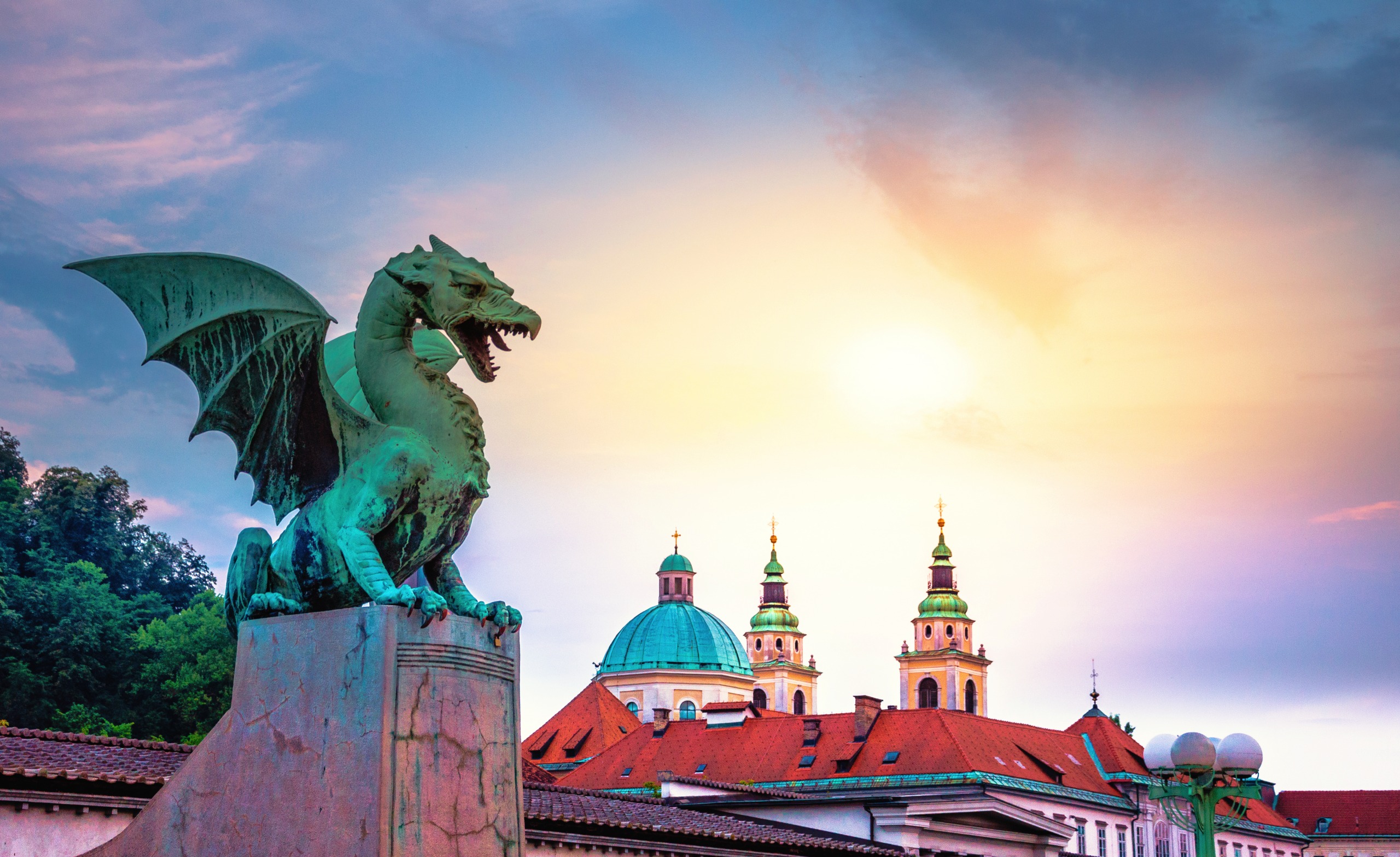
- The Dragon Bridge, another iconic structure on the Ljubljanica, just a few minutes' walk away.
- Ljubljana and its castle perched on the hill of the same name.
- Ptuj Castle, to continue the heritage itinerary in the eastern part of the country.
- The Pokljuka Plateau, for a shift toward alpine nature.
Frequently asked questions
Frequently asked questions
The name comes from the structure's configuration: a central stone bridge, dating from 1842, framed by two pedestrian walkways added between 1929 and 1932 by Jože Plečnik. The three parallel bridges form a unique ensemble, designated in Slovenian as Tromostovje.
The central bridge was built in 1842 by Giovanni Picco, an architect originally from Villach. The two lateral walkways are the work of Slovenian architect Jože Plečnik, added between 1929 and 1932.
No. The Triple Bridge is entirely pedestrian and has been part of Ljubljana's city center pedestrian zone since 2007.
A crossing takes a few minutes, but allow 15 to 30 minutes to observe architectural details, descend to the lower terrace, and enjoy the views over the Ljubljanica.
Extend your journey
The Triple Bridge naturally fits into a broader discovery of the Slovenian capital and its alpine landscapes. To plan a complete itinerary, consult our selection of trips to Slovénie.
Interested in this visit?
We can include it in your personalised itinerary.