Škofja Loka Castle (Loka Castle & Museum)
Škofja Loka Castle (Loka Castle & Museum)
Perched above the old town, Škofja Loka Castle houses a regional museum chronicling eight centuries of local history, featuring a Renaissance courtyard and remarkable panoramas over the Slovenian Alps.
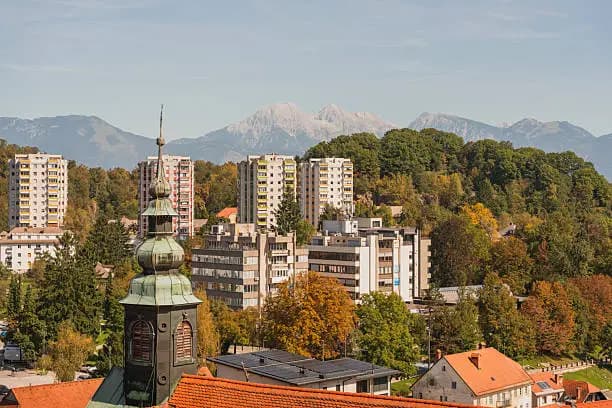
Crowned on a rocky crag overlooking the medieval old town of Škofja Loka, Loka Castle commands the confluence of the Selška Sora and Poljanska Sora rivers. Built in the twelfth century and refined through successive centuries, it now houses the Škofja Loka Museum, one of Slovénie's finest preserved regional museums. Its commanding view over terra-cotta-tiled roofs and the Škofja Loka Alps makes it an unmissable landmark of the region.
Quick Practical Details
- Access: on foot from the main square (Mestni trg) via a paved pathway, approximately 10 minutes uphill.
- Recommended duration: 1 to 1.5 hours for the museum and surrounding grounds.
- Admission: paid entry (museum); exterior grounds are freely accessible.
- Accessibility: limited due to the sloped pathway and interior stairs.
What to See
The museum occupies multiple rooms spread across the castle's floors. Collections span local archaeology (prehistoric and Roman artifacts), traditional craftsmanship, folk costumes, and the town's history from the Middle Ages onward. One section is devoted to the Passion of Škofja Loka, a Baroque procession inscribed on the UNESCO Intangible Cultural Heritage list. The interior courtyard, with its Renaissance arcades, merits an extended pause.
History and Context
The castle is first mentioned in the twelfth century. It belonged to the Bishops of Freising (Bavaria), who administered Škofja Loka for more than eight hundred years—a record of feudal longevity in Central Europe. Damaged by the 1511 earthquake, it was rebuilt in a late Renaissance-Gothic style. The town itself ranks among Slovénie's best-preserved medieval cities.
Highlights of Your Visit
The Renaissance Courtyard
Two-tiered arcades frame a paved courtyard of considerable architectural coherence. Here you best perceive the layering of Gothic and Renaissance styles that defines the castle.
The Ethnographic Collections
Agricultural tools, peasant furniture, embroidered textiles: these objects reconstruct daily life in the villages of the Škofja Loka region from the seventeenth to nineteenth centuries with a precision rare for a museum of this scale.
The View from the Ramparts
From the castle's edges, your gaze spans the old town's rooftops, both Sora rivers, and on clear days, the peaks of the Škofja Loka Alps. It is one of the region's most photographed viewpoints.
Photography Tips
Morning light is ideal for photographing the castle façade from the base of the hill, with the old town in the foreground. In late afternoon, terra-cotta tiles take on warm tones from the ramparts. Inside, the courtyard benefits from good midday light. No known photographic restrictions apply to exterior spaces; check with reception about rules for museum rooms.
Location and Access
The castle stands in Škofja Loka, roughly 25 km northwest of Ljubljana. The town is served by train from Ljubljana (Ljubljana–Jesenice line) or by bus. From the station or town center, the castle is accessible on foot in under 15 minutes. Parking is available near the historic core. Accessibility for those with reduced mobility is challenging.
Nearby
- Škofja Loka Old Town — one of Slovénie's finest preserved medieval ensembles, a stone's throw from the castle.
- Saint James Church — a fifteenth-century Gothic church at the heart of the main square.
- Capuchin Bridge — a medieval bridge over the Selška Sora, the town's iconic symbol.
- Sora Gorges — hiking trails along the rivers through pristine natural surroundings.
Frequently asked questions
Spring and summer offer the finest conditions: the access path is passable and Alpine views are unobstructed. In winter, snow on the old town's rooftops creates a striking scene, but verify museum hours before making the trip.
Plan on 1 to 1.5 hours for the museum and surrounding grounds. Combined with a stroll through the old town, allow a half day.
Yes. The exterior grounds and the path leading to the castle are freely accessible. The panorama over the town is visible without an admission ticket.
Access is difficult: the approach path is sloped and the interiors contain stairs. It is advisable to contact the museum in advance to learn what accommodations are available.
Exterior spaces and the courtyard are freely photographable. For interior rooms, inquire at reception, as rules may vary depending on exhibitions.
The castle pairs naturally with the old town, Saint James Church, and the Capuchin Bridge, all within a 10-minute walk. A half day is sufficient to cover the entire historic center.
Interested in this visit?
We can include it in your personalised itinerary.