Kras Biosphere Reserve
The Kras gave its name to a global geological phenomenon. Between UNESCO-listed caves, medieval villages, Teran wine and Lipica Stud Farm, this Slovenian limestone plateau deserves a full day of exploration.
The Slovenian Kras is a limestone plateau situated between Trieste and the Vipava Valley, in western Slovenia. This territory gave its name to a global geological phenomenon: "karst". Recognised as a biosphere reserve by UNESCO in 2004, it combines landscapes of sinkholes, villages of grey stone, vineyards and pubescent oak forests. Here, geology, rural culture and local gastronomy form a coherent and little-frequented whole.
Quick practical facts
- Access: from Ljubljana or Trieste via the A1/E61 motorway, Divača or Sežana exit.
- Recommended duration: a full day to combine villages, caves and tasting.
- Clothing: walking shoes recommended on limestone trails.
- Entry: the territory is freely accessible; certain sites (Škocjan Caves, Lipica Stud Farm) are paid entry.
What to see
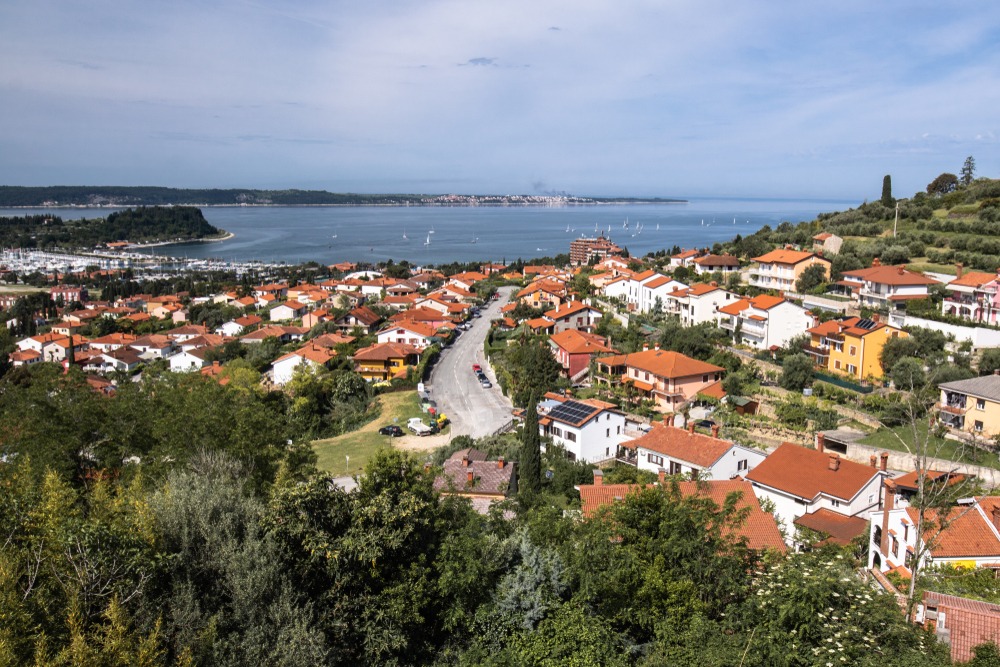
The plateau offers an open landscape, dotted with sinkholes—these circular depressions typical of karst terrain. Traditional villages (Štanjel, Tomaj, Dutovlje) feature grey limestone houses with red-tile roofs. Vegetation alternates between scrubland, Teran vineyards and black pine forests. Beneath the surface lies one of Europe's most extensive cave networks.
History and context
The word "karst" comes from the Slovenian toponym Kras, adopted by the geological world in the 19th century to describe reliefs shaped by limestone dissolution. The region was long a crossroads between the Slavic world, the Austro-Hungarian Empire and Italy. UNESCO inscribed Škocjan Caves as a World Heritage site in 1986; the biosphere reserve has covered a wider perimeter since 2004.
Highlights of the visit
Škocjan Caves
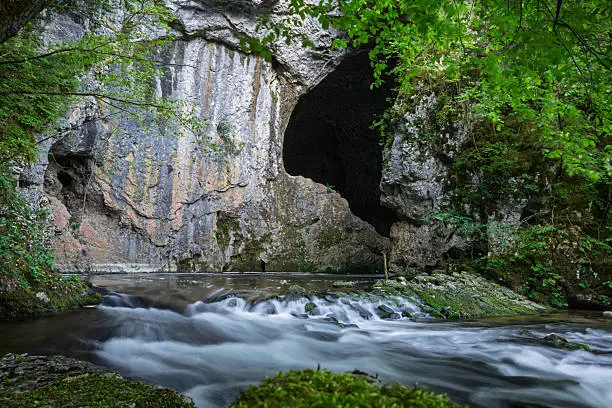
Inscribed on the UNESCO World Heritage list, these caves shelter one of Europe's largest underground chambers, traversed by the Reka River. The guided tour descends through spectacular galleries across several levels.
The village of Štanjel
Perched on a hillside, this medieval village preserves a castle, a Romanesque church and a Ferrari garden designed in the early 20th century. The panorama embraces the plateau to the Julian Alps in clear weather.
Teran wine and Kras gastronomy
Teran is an AOC red wine produced exclusively on this red soil (terra rossa). It accompanies Karst ham (kraški pršut), air-dried by the plateau's winds. Several estates offer tastings directly at the property.
Lipica Stud Farm
Founded in 1580 by the Habsburgs, Lipica is the birthplace of the Lipizzan horse. The stud farm offers tours of the estate and equestrian performances. It is one of Europe's oldest continuously operating stud farms.
Photography tips
Morning light is ideal on grey stone villages, before the sun climbs too high. Sinkholes photograph best from ridges in late afternoon. Inside Škocjan Caves, photography is permitted without flash in certain areas—check guidelines on-site.
Location and access
The Kras extends between Sežana to the north and Divača to the south-east, roughly 80 km from Ljubljana and 30 km from Trieste. Divača railway station serves the region from Ljubljana. By car, the A1 motorway provides easy access to the various villages. The Škocjan Caves and Lipica Stud Farm are the two most structured sites for guided visits.
Nearby
- Škocjan Caves — UNESCO site, underground river and giant chambers to explore on a guided tour.
- Lipica Stud Farm — birthplace of the Lipizzan, visits and equestrian shows in a historic estate.
- Postojna Caves — Slovenia's most visited cave network, about twenty kilometres to the north-east.
- Predjama Castle — medieval fortress built into a cliff face, near Postojna.
- Vipava Valley — vineyards and villages at the foot of the plateau, renowned for white wines.
Frequently asked questions
Spring (April-May) and autumn (September-October) offer pleasant temperatures and striking vegetation. Summer can be hot and dry on the limestone plateau. In winter, the bora—a fierce wind—sometimes blows hard across the region.
Visits to Škocjan Caves are conducted in guided groups at set times. Advance booking is recommended during peak season to avoid waiting on-site.
Yes. Trieste is roughly 30 km from the plateau. One day allows you to visit one or two Kras sites in the morning and reach Trieste in the late afternoon.
Teran AOC is produced exclusively on the red soil of the Kras. It is found in local estates, restaurants in the region and certain specialist shops in Ljubljana, but remains rare outside Slovenia.
Several marked trails cross the plateau between the villages. The terrain is flat to gently rolling, suited to cycling. Secondary roads see little traffic, making cycling journeys a pleasure.
Interested in this visit?
We can include it in your personalised itinerary.