Dominican Monastery of Ptuj
Founded in the 13th century in Slovenia's oldest city, the Dominican Monastery of Ptuj now houses the Regional Museum with its Roman lapidary, Gothic cloister, and ethnographic collections.
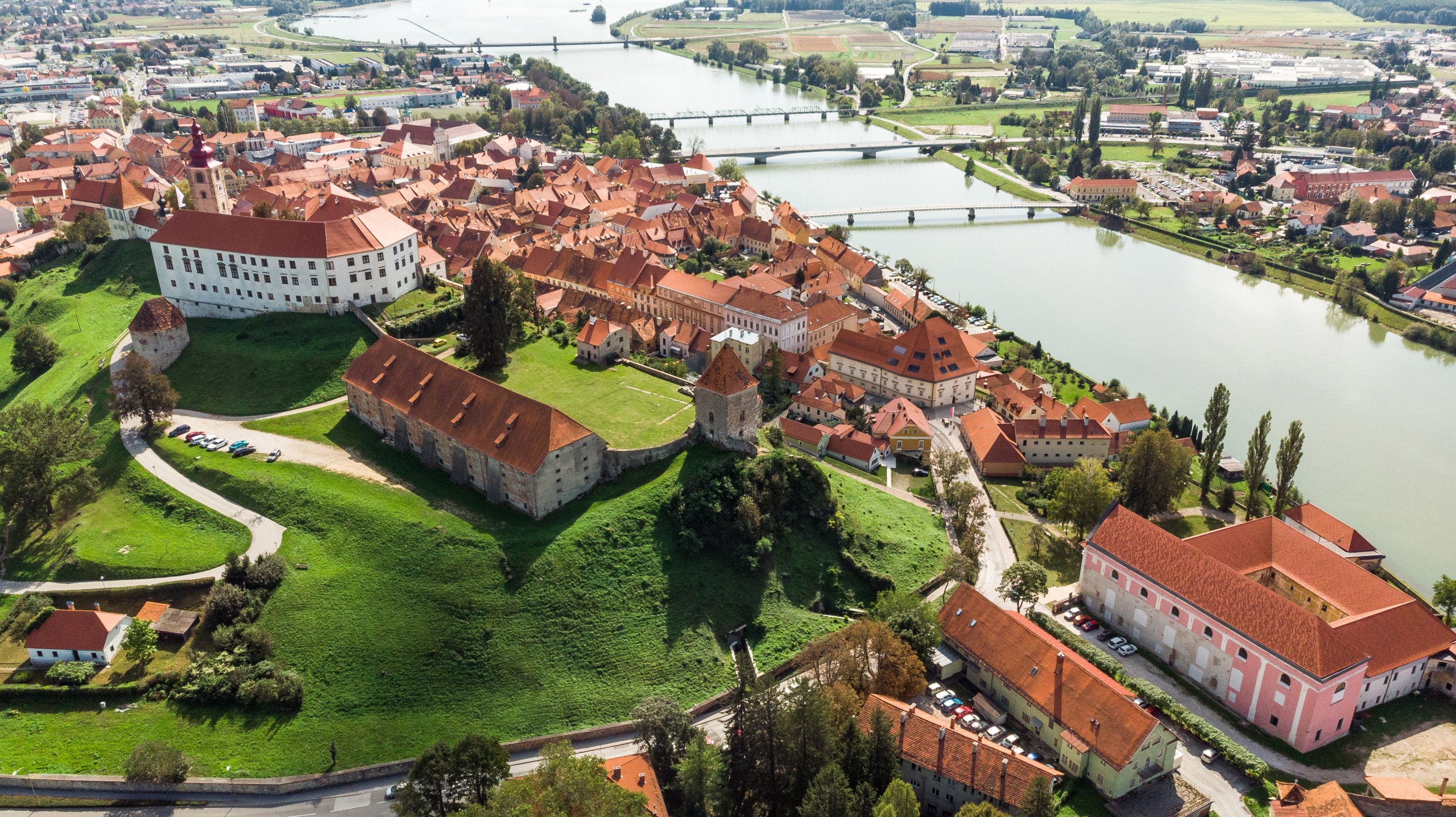
The Dominican Monastery of Ptuj is one of Slovenia's best-preserved medieval monastic complexes. Founded in the 13th century in the country's oldest city, it now houses the Ptuj-Ormož Regional Museum. The entire complex — Gothic church, cloister, and outbuildings — bears witness to seven centuries of religious and cultural life in the heart of Lower Styria.
Practical information at a glance
- Admission: Paid (regional museum ticket included)
- Recommended duration: 1 to 1.5 hours
- Access: Historic center of Ptuj, within walking distance of the railway station and castle
What to see
The site comprises a single-nave Gothic church, a cloister with arcades, and several convent rooms converted into museum spaces. The Regional Museum's collections feature archaeological objects, masks from the Kurentovanje carnival, ancient musical instruments, and pieces of sacred art. The lapidary brings together stelae and Roman sculptures uncovered through local excavations.
History and context
The Dominicans settled in Ptuj around 1230, shortly after the order's founding. The monastery flourished throughout the Middle Ages before being suppressed under Joseph II in 1786. The buildings then passed to civilian uses before eventually housing the regional museum in the 20th century. The church retains Gothic frescoes and Baroque elements added during successive renovations.
Highlights of the visit
The medieval cloister
The cloister with its Gothic galleries forms the architectural heart of the complex. Its arcades frame a peaceful interior garden, removed from the bustle of the street. It is the site's best-preserved and most photographed space.
The Roman lapidary
Ptuj was the great Roman city of Poetovio. The monastery's lapidary displays votive altars, funeral stelae, and stone sculptures that illustrate the city's importance under the Empire.
The Kurentovanje masks
The collection of masks and costumes linked to the Kurentovanje carnival — one of Central Europe's oldest carnivals — offers unique ethnographic insight into the region's traditions.
Etiquette and visiting rules
- The church is a heritage space: respectful behavior is expected.
- Certain areas may be closed during cultural events or restoration work.
Photography tips
Morning light filters through the cloister's arcades, creating regular shadow patterns on the stone floor. A wide-angle lens works best to capture the full gallery. Inside the museum, check flash restrictions before photographing archaeological pieces.
Location and access
The monastery is located in Ptuj's historic center, a few minutes' walk from the Ptuj Castle, which overlooks the town from its hilltop. Ptuj railway station is accessible from Maribor in less than an hour. The compact town center is entirely walkable; wheelchair accessibility in medieval sections remains limited due to cobblestones and old thresholds.
Nearby attractions
- Ptuj Castle — medieval fortress perched on the hilltop, with views over the Drava River and surrounding vineyards.
- Roman Tower of Ptuj — remnant of ancient Poetovio, visible within the urban fabric.
- Maribor Old Town — capital of Slovenian Styria, less than an hour away, with its own cathedral and historic quarter.
Frequently asked questions
No. Suppressed in 1786 under Joseph II, the complex is no longer home to a religious community. Today it functions as a museum site managed by the Ptuj-Ormož Regional Museum.
Spring and autumn offer pleasant temperatures and fewer tourists. In February, the Kurentovanje carnival brings the entire town to life and provides vibrant context for the museum's collections.
Yes, and it's highly recommended. Both sites are part of the same regional museum network. A combined ticket is often available; inquire at the museum reception desk.
Photography is generally permitted in the cloister and exhibition halls, without flash on fragile pieces. Check the information signs at the entrance of each room.
Accessibility is partial. Ptuj's historic center is cobblestoned and some medieval spaces feature thresholds or stairs. Contact the museum before your visit for more information.
Interested in this visit?
We can include it in your personalised itinerary.