Miramare Castle
Miramare Castle
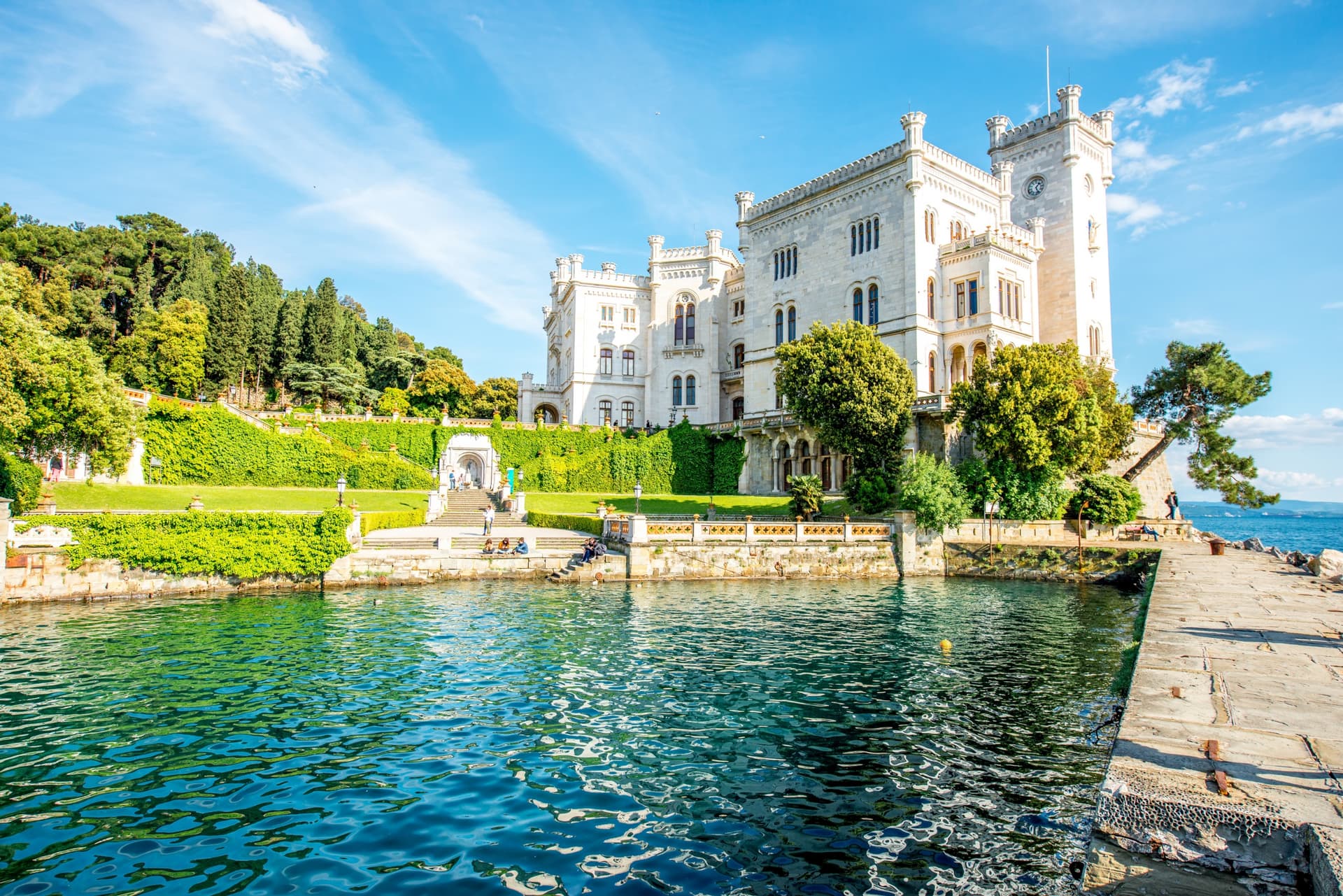
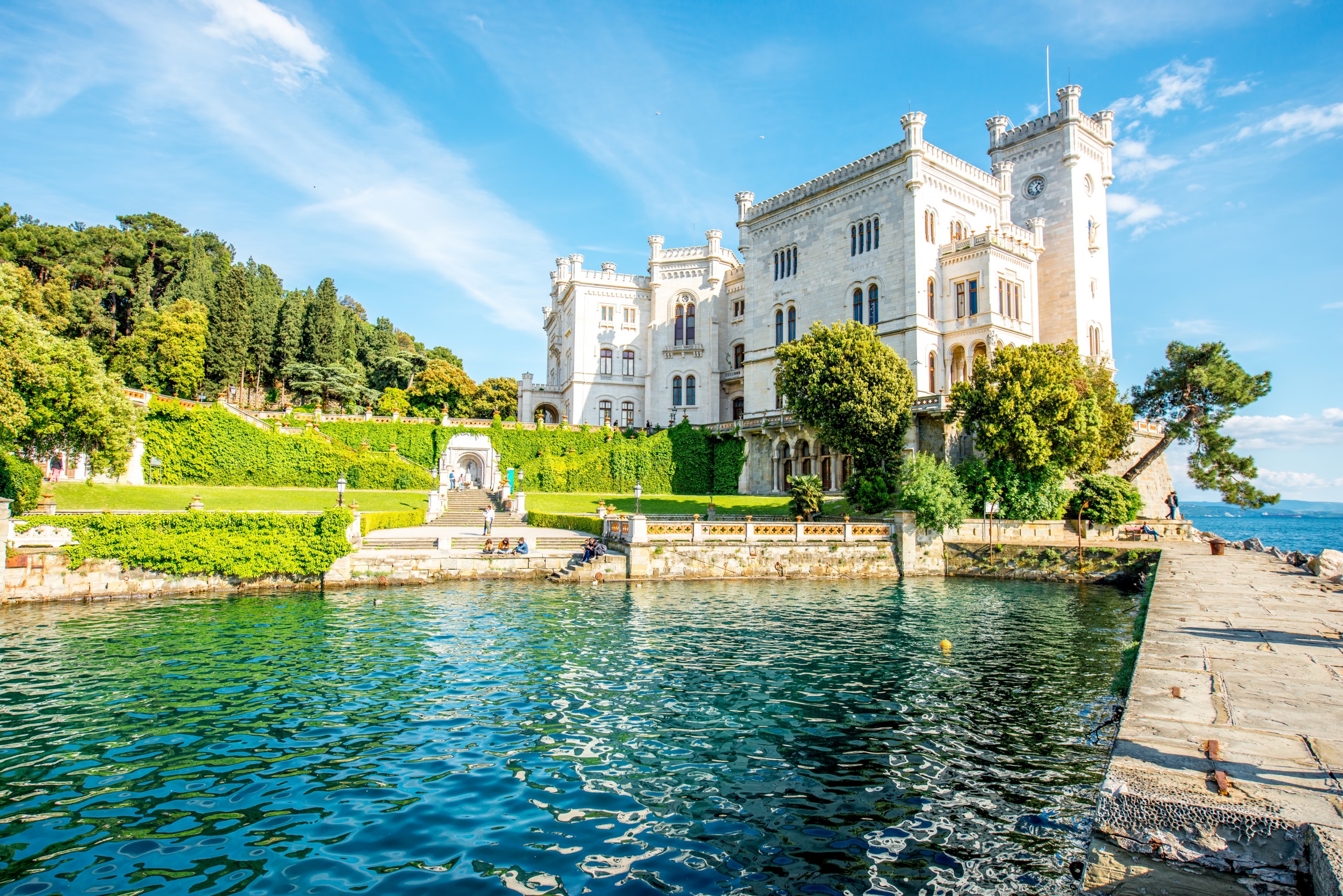
Former residence of Archduke Maximilian of Habsburg, Miramare Castle overlooks the Adriatic Sea near Trieste, set within a 22-hectare botanical park.
Miramare Castle dominates the Adriatic Sea on the limestone promontory of Grignano, some ten kilometers north of Trieste, in Italy. Although situated in Italian territory, this site ranks among the most frequent excursions from western Slovenia, less than two hours from Ljubljana. The residence of Archduke Maximilian of Habsburg-Lorraine, the castle preserves period furnishings and a 22-hectare botanical park open to visitors.
Why visit Miramare Castle
Three reasons merit the visit. First, the castle's interior has remained largely unchanged since the nineteenth century, with furnishings crafted by artisans Franz and Julius Hofmann and decorations directly tied to Maximilian's biography—future emperor of Mexico. Second, the 22-hectare park blends an Italian garden and an English garden, planted with cedars imported from Lebanon and cypress trees from California and Mexico. Finally, the site houses the headquarters of the Miramare Marine Nature Reserve, which protects a coastal zone rich in submarine fauna.
The visit thus combines imperial history, eclectic architecture, and a seaside stroll, making it an ideal stop for families and heritage enthusiasts alike.
History of the castle
The castle was built between 1856 and 1860 by Austrian architect Carl Junker, commissioned by Archduke Maximilian of Habsburg-Lorraine, brother to Emperor Francis Joseph and husband of Princess Charlotte of Belgium. Maximilian, then admiral of the Austrian Navy and future emperor of Mexico, acquired the Grignano promontory, which was then entirely barren of vegetation. The cornerstone was laid on March 1, 1856.
The building was not yet complete when Maximilian and Charlotte moved in on Christmas Eve 1860: they occupied the ground floor while the first floor was still under construction. After Maximilian's death in June 1867 in Mexico, Charlotte resided there alone until his sister-in-law, Queen Marie Henriette, brought her back to Belgium.
During the First World War, furnishings and objects were repatriated to Vienna, then restored following an Italian-Austrian agreement. The site opened to the public in spring 1929. Between the 1930s and 1943, Duke Amedeo d'Aosta and his family lived there. After the Second World War, the castle served successively as headquarters for New Zealand, British, and American troops. Permanent reopening to the public occurred in March 1955.
For reference, in 2016, the history museum welcomed approximately 257,000 visitors and the park over 833,000, figures that confirm the castle's standing among the most-visited sites in northeastern Italy.
What to see on-site
The castle
The building adopts an eclectic style blending Romanesque, Gothic, and Renaissance inspirations, desired by Maximilian following his travels in England, Austria, and Italy. The interiors were designed by Franz and Julius Hofmann.
- Ground floor: private apartments of the imperial couple. Maximilian's bedroom replicates the cabin of his ship Novara. The library retains its original decor.
- First floor: state rooms with red tapestries, refined furnishings, stained glass, and imperial symbols intended for distinguished guests.
- Japanese and Chinese cabinets: pottery from China and Japan brought back from Maximilian's voyages.
- Apartments of Duke Amedeo of Savoy-Aosta: furnishings from the 1930s, in a distinctly more modern style.
The 22-hectare park
The park combines an Italian garden, designed according to Maximilian's own specifications, and a freer English garden. It features cedars from Lebanon, cypress trees from California and Mexico, as well as cannons gifted by the king of Belgium. A small lake populated with swans and several sculptures line the pathways. The former stables have been converted into temporary exhibition halls.
Practical information
- Hours: the castle is open daily except January 1 and December 25; the park closes earlier in winter. Check current hours on the official website before departing.
- Admission: paid entry to the museum (moderate tariff), park access free or at minimal cost depending on season.
- Visit duration: allow 1 to 1.5 hours for the castle, and as much for the park if you linger to the waterfront.
- Accessibility: the ground floor is accessible to persons with reduced mobility; the upper floor is accessible by stairs only.
How to get there
The castle is located approximately 8 km from Trieste's center, on the coastal road leading toward Sistiana.
- By bus: line 6 from Trieste train station or Piazza Oberdan, terminus approximately 10 minutes' walk from the park entrance.
- By boat (summer season): Trieste-Sistiana line with stop at Grignano, just behind the park. The crossing takes approximately 40 minutes. Since the coast faces toward the sun in the morning, prefer an afternoon crossing for photography.
- From Slovenia: Trieste is approximately 1.5 hours' drive from Ljubljana and 30 minutes from Koper. Opportunity to combine the visit with a stop in Trieste's historic center.
Combine with
Several sites complement a day around Miramare or a cross-border stay:
- Piazza Unità d'Italia, Trieste's main square facing the sea, to visit on the same day.
- Trieste and its Austro-Hungarian historic center.
- Ptuj Castle, another noble residence in eastern Slovenia, to extend the Habsburg theme.
- Kobarid Museum, dedicated to the Isonzo front of the First World War, on the route between Trieste and the Soča Valley.
Frequently asked questions
Frequently asked questions
The castle is located in Italy, in the Friuli Venezia Giulia region, approximately 8 km northwest of Trieste. However, it is easily accessible from western Slovenia and often features in combined Slovenia-Italy itineraries.
Allow 1 to 1.5 hours for the castle and its museum, and as much for the park, totaling approximately half a day to fully enjoy the site.
Park access is generally free or at minimal cost depending on the season. Only entry to the castle's interiors is paid.
Yes, in summer season, the Trieste-Sistiana line stops at Grignano, in immediate proximity to the park. The crossing takes approximately 40 minutes.
Archduke Maximilian of Habsburg-Lorraine, brother to Emperor Francis Joseph and future emperor of Mexico, commissioned its construction from Austrian architect Carl Junker between 1856 and 1860.
To integrate a visit to Miramare Castle into a cross-border itinerary, consult our travel experiences in Slovenia including excursions to Trieste and the Adriatic coast.
Interested in this visit?
We can include it in your personalised itinerary.